
Start with what life feels like now
What can help when thinking takes more effort?
We help people with memory lapses and mental fatigue by examining thinking, energy and related systems so that they can work toward handling everyday responsibilities.
How we look at the whole picture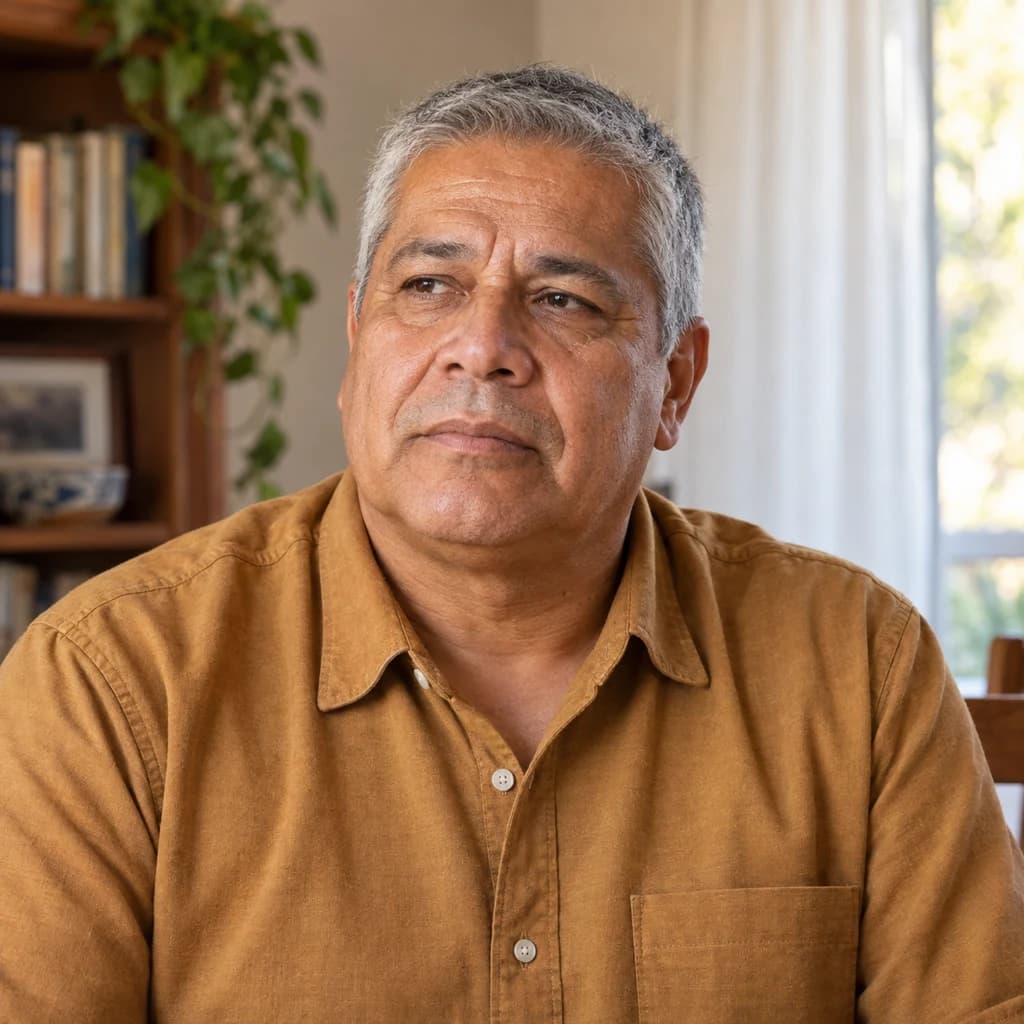
You lose your place while reading, forget why you entered a room, or need much longer to finish familiar work.
Other people may see you looking well while you are working hard just to keep up.
You do not need to know which treatment to ask for. Start with what has changed and what you want to be able to do again.
The 7 Domains of Recovery™
Your symptoms may belong in the same conversation.
Thinking depends on more than memory alone. We consider attention, sleep, energy, sensory demands, emotional health and daily circumstances across the seven domains.
Neuregen's proprietary 7 Domains of Recovery framework organizes that conversation around seven connected parts of your life and health. We consider all seven, then focus the evaluation on the questions your history raises.
Explore our clinical framework- 1Brain function & neural networks
What has changed in your memory, concentration, balance or sensory tolerance?
- 2Autonomic & nervous system regulation
What happens when you stand, move, rest or encounter stress?
- 3Immune function & neuroinflammation
What immune history, reactions or symptoms need a closer look?
- 4Brain energy & metabolic health
What affects your energy through the day and after activity?
- 5Structure, stability & body-to-brain signals
How do pain, posture, movement and stability affect what you can do?
- 6Psychological flexibility & behavioral recovery
How are mood, stress and patterns of coping affecting your day?
- 7Life, relationships & environment
What demands, relationships and support shape your recovery?
A plan starts with the things you want to do again.
We ask which tasks have become difficult and compare that story with relevant cognitive and functional assessments. Together we choose a few practical goals to follow over time.
01
Tell us what you want your life to look like
We start with what has changed, what you have tried, and the activities you most want to return to.
02
Answer the questions the history leaves open
We review prior reports and select relevant assessments. You should understand what each assessment is meant to clarify.
03
Agree on the priorities and the first steps
We discuss the findings, possible approaches, costs and practical constraints. The plan sets an order that fits your situation.
04
Check what changes and adjust together
We compare your response with the starting point, including daily function. If something is not helping, we discuss what needs to change.
Only then do we discuss which therapies, if any, belong in your plan. The choice depends on the findings, the evidence, your preferences and how you respond.
Talk through your situationNeurorehabilitation · Cognitive
Cognitive Rehabilitation
Targeted neural-network restoration and brain-function recovery.
Conceptual artwork for the care discussion. Individual findings and treatment options require clinical evaluation.
How cognitive rehabilitation works
Domain 1 focuses on neuroplasticity, cognitive function, sensory processing, motor control, and pain modulation. Rehabilitation in this domain begins with cognitive baseline profiling to identify network gaps — then applies targeted sensory, motor, and cognitive inputs designed to drive neuroplastic change in the circuits identified as underperforming.
For patients with post-concussion syndrome, brain injury, or cognitive decline, this means working systematically through deficits identified in the assessment: sensory processing and visual-vestibular integration work, targeted neuroplasticity activation protocols, and ongoing cognitive function monitoring as the program progresses.
Domain 4 addresses mitochondrial efficiency, cerebral blood flow, and metabolic flexibility. When metabolic deficits contribute to cognitive impairment — a common finding in post-concussion, cognitive decline, and long COVID presentations — Domain 4 interventions create a more favorable environment for rehabilitation in Domain 1. The two domains work in concert.
Cognitive rehabilitation applies to the Alzheimer's program as well. The protocols described here form the rehabilitation foundation of Neuregen's Alzheimer's and memory care work.
Domains most involved:
Every plan starts from the same map: the 7 Domains of Recovery.
How it fits your plan
Cognitive rehabilitation focuses on the tasks that have become difficult, such as remembering information or sustaining attention. We use assessment and follow-up to adjust the work as your needs change.
The starting point is a task that has become difficult, such as reading, walking or concentrating. We assess what contributes to that difficulty across the seven domains and choose rehabilitation activities that can be adjusted to your response.
We review your history, explain the findings, agree on next steps and check how you respond.
Potential Therapies
We use established medicine where it works, and emerging medicine where it makes sense.
These are options to discuss after evaluation, not a predetermined treatment plan. Each label refers to the condition or indication described beside that therapy; evidence can differ for another use. An evidence label does not mean FDA approval.
- Cognitive baseline profilingEvidence: Established
Identifies specific neural-network gaps before rehabilitation begins
- Sensory processing and visual-vestibular integration therapyEvidence: Established
Domain 1 — targets sensory processing deficits common in post-concussion and dysautonomia
- Targeted neuroplasticity activationEvidence: Established
Domain 1 — precision sensory and motor inputs directed at identified circuit deficits
- Metabolic and brain-energy support protocolsEvidence: Established
Domain 4 — cerebral blood flow, mitochondrial efficiency, nutrient status where metabolic deficit is documented
- Ongoing cognitive function monitoring
Re-administration of baseline instruments at defined intervals; progress documented rather than assumed
Where the evidence stands
Cognitive rehabilitation, neuroplasticity activation, and sensory processing protocols are supported by established clinical evidence for brain injury, post-concussion, and cognitive decline.
How we grade evidence
Pricing
| Service | Price |
|---|---|
| Functional neurology assessment | Confirmed in writing at your Strategy Consultation |
| Neurorehabilitation programScoped after the assessment; quoted as a whole, not per visit | Confirmed in writing at your Strategy Consultation |
Neuregen is an out-of-network specialty clinic. Most therapies listed here are not covered by insurance; we provide itemized documentation you can submit to your insurer, and we tell you before any therapy which parts, if any, are typically reimbursed.
Financing options are reviewed at your Strategy Consultation before any plan is finalized.
The training behind this care
At Neuregen, rehabilitation is the organizing discipline. Cognitive, balance and physical goals are considered alongside autonomic, psychiatric and medical concerns, so the plan can account for more than one barrier to daily activity.
Dr. David George: Board certifications and training in functional neurology, integrative psychiatry, and mental health; certified brain injury specialist.
Training most relevant to this area
- Diplomate, American Chiropractic Neurology Board (DACNB, 2005)
- Co-developer, FNOR (Functional Neuro-Orthopedic Rehabilitation)
- NASM Certified Corrective Exercise Specialist
- Fellow, International Academy of Medical Acupuncture
- MUA Certified
- Vestibular rehabilitation (VRT)
- Advanced neurodiagnostics (EMG, NCV, SSEP, IOM, VNG)
These are the founder’s qualifications. We confirm the treating clinician and their role when discussing your plan.
See Dr. George’s full credentialsFrequently asked questions
What conditions does cognitive rehabilitation address at Neuregen?
Cognitive rehabilitation is relevant for post-concussion syndrome, traumatic and acquired brain injury, cognitive decline at any stage, long COVID-related cognitive impairment, and Alzheimer's disease. The specific protocols applied depend on the findings of the functional neurology assessment — the presenting label does not determine the protocol; the identified deficits do.
Is cognitive rehabilitation the same as brain training apps or games?
No. Cognitive rehabilitation at Neuregen is clinician-directed, assessment-driven, and targeted at specific neural circuit deficits identified in the functional neurology evaluation. It incorporates sensory processing work, visual-vestibular integration, and metabolic support — not generic cognitive challenges. Progress is measured against the same validated instruments used at baseline.
How does cognitive rehabilitation relate to the Alzheimer's program?
The cognitive rehabilitation protocols in the neurorehabilitation program are the same protocols that form the rehabilitation foundation of Neuregen's Alzheimer's and memory care work. Domain 1 and Domain 4 apply to both. The Alzheimer's program is the full-program context; cognitive rehabilitation is the active treatment component that runs throughout it.
How is progress measured?
The same validated assessments used to establish the baseline — including domain-specific cognitive screens and the instruments from the intake assessment — are re-administered at defined intervals during the program. Progress is documented rather than assumed. Where measurable change is not occurring, the plan is adapted.
Start with a Strategy Consultation
If you keep setting aside activities because of symptoms, those missed activities are the current cost. An evaluation can help establish a starting point and practical goals at a pace you can discuss with the team.
8090 N. 85th Way, Suite 100, Scottsdale, AZ 85258 · Mon–Thu, 9:00 AM – 5:30 PM