Read the full transcript
When you face a sudden threat, your nervous system triggers an automatic, high-energy biological state designed exclusively for acute survival.
It floods the body with the resources needed to survive a crisis.
Under normal conditions, the nervous system initiates a deliberate cooldown once the threat has passed, deactivating the alarm and returning the body to a state of rest.
But extreme trauma or physiological stress can cause this alarm to permanently jam in the on position.
The biological circuit is interrupted, leaving the system caught in a continuous loop of high alert.
When this system gets stuck, the body exhausts its own cellular resources, fighting a ghost threat.
A life-saving evolutionary tool becomes a chronic physical disease.
This permanent hyperarousal loop drives symptoms of treatment-resistant PTSD, severe panic disorders, and dysautonomia like POTS.
Standard medical responses often rely on cognitive therapies or psychiatric medications to influence the mind's chemistry and thought patterns.
These conventional treatments frequently stall because they attempt to resolve a physical hardware blockage in the nervous system using software-level chemical adjustments.
Until the physical nervous system is forced out of chronic hyperarousal, the patient's baseline adaptive capacity, their biological ability to heal, remains paralyzed.
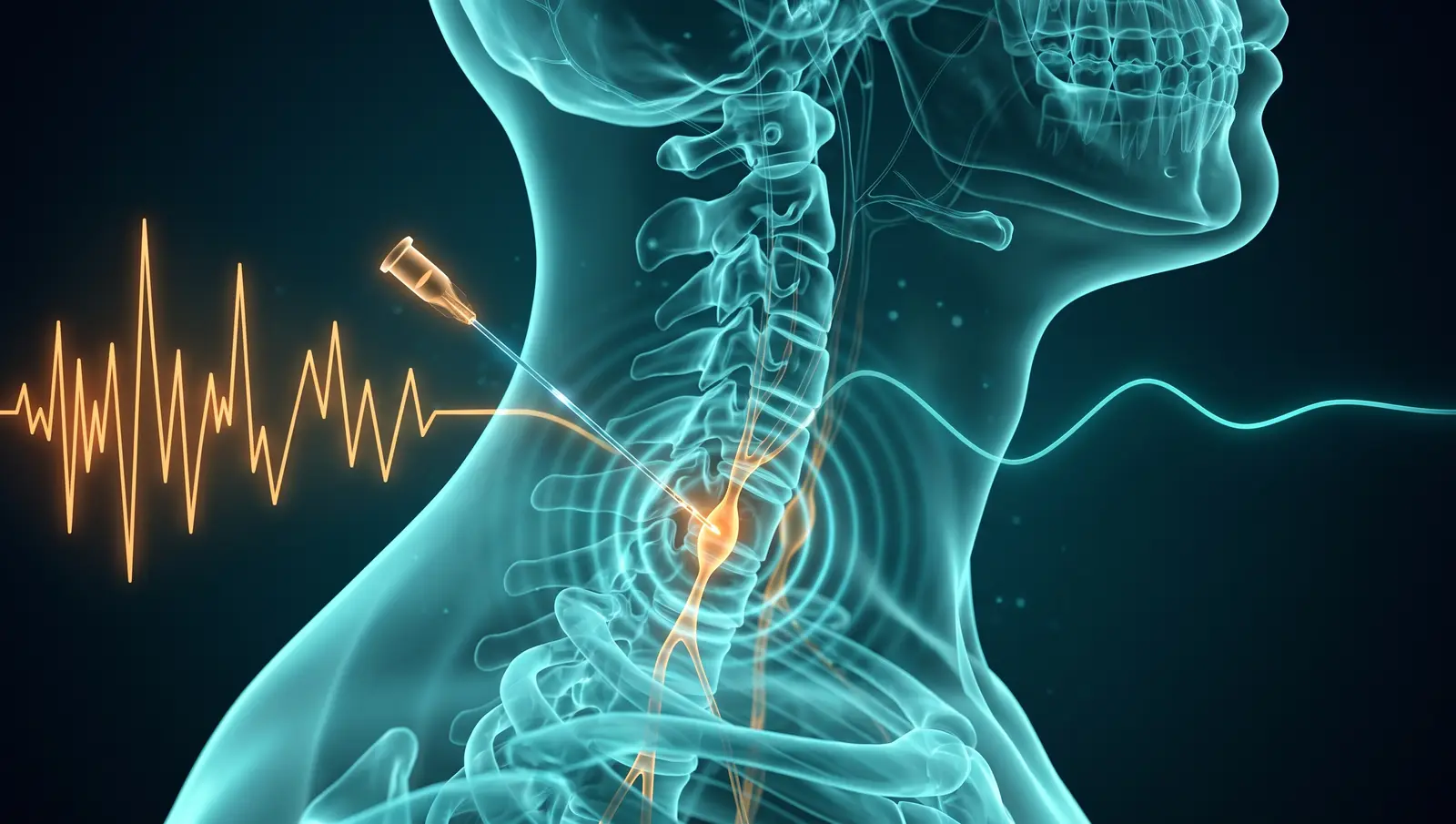
To address the physical hardware, interventional psychiatry targets the stellate ganglion.
This bundle of sympathetic nerves in the lower neck carries fight or flight signals.
The stellate ganglion block involves applying targeted anesthetic directly to these nerves, neutralizing the cluster and turning the overactive signaling off.
Numbing this nerve chain provides a window for the system to complete a biological reboot.
This intervention physically restarts a malfunctioning biological mainframe from the outside in.
The sequence begins when the anesthetic blocks the sympathetic nerve chain's output of norepinephrine, easing the body's chronic adrenaline flood.
In step two, silencing this nerve bundle severs the faulty distress signal traveling back to the brain.
This lack of incoming distress signals forces the amygdala, the brain's fear center, out of hypervigilance.
Third, the brain registers that the central alarm is now off, allowing heart rate variability and baseline blood pressure to normalize.
As the alarm quiets, the body's baseline cardiovascular rhythm has room to settle.
For people who respond, that can mean healthier heart rate variability, though no timing or outcome is guaranteed.
Step four involves the calming of chronic neurogenic inflammatory loops throughout the body.
This widespread inflammation is fueled and sustained by continuous sympathetic stress.
By neutralizing a single physical node in the neck, a paralyzing biological loop is dismantled through a chain reaction of relief.
Because SGB targets the physical nervous system, the dampening effects on the fight or flight response can often be felt the same day as the procedure.
This interventional procedure addresses the biological source of the symptoms, rather than the perpetual management required by daily prescription regimens.
Removing chronic hyperarousal is the vital first step in a larger healing process, which is mapped through the seven domains of recovery.
This biological reset is the foundation for what follows.
The brain can begin to rebuild resilience once it is no longer fighting for survival.
This restoration of adaptive capacity gives the patient back the inherent power to adapt, heal, grow, and thrive in the face of life's challenges.