Daily function · ADCS-ADL
Everyday activities, such as dressing and managing daily tasks.
52%
less decline reported
p = 0.03
Statistically significant difference
+3.5 points versus sham
95% CI: +0.4 to +6.6

Start with what life feels like now
We help people with memory changes that affect life at home by evaluating their needs with their family so that they can plan support around the activities and relationships that matter.
How we look at the whole picture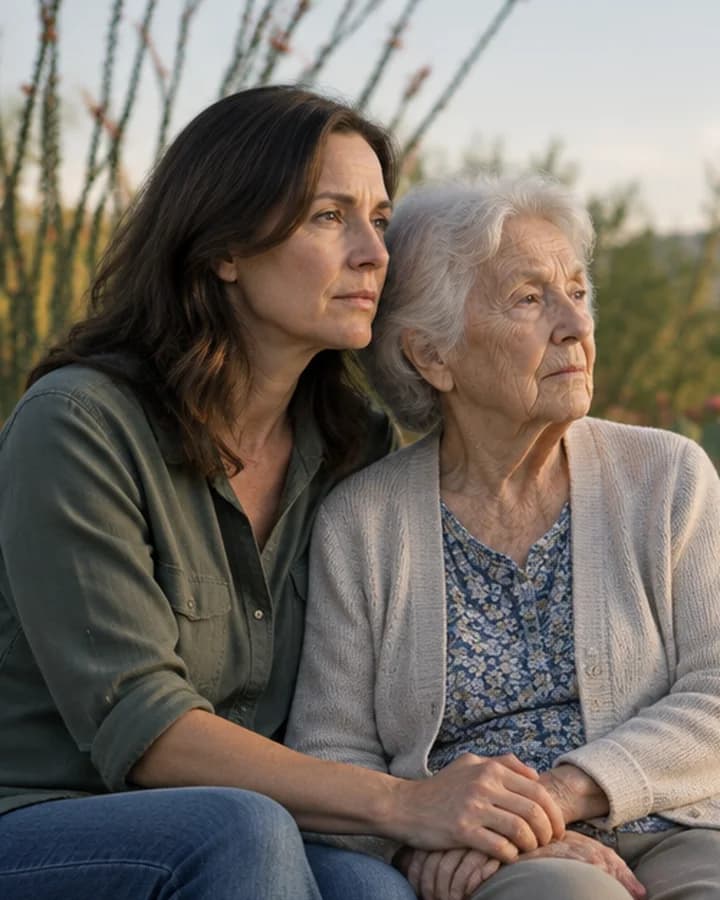
Conversations repeat. Familiar routines take more effort. You may be noticing changes in yourself or someone you love.
You want to understand what is happening and what you can do next as a family.
You do not need to know which treatment to ask for. Start with what has changed and what you want to be able to do again.
So we really believe that a diagnosis should be the beginning of a strategy, not the end of one. Too many families are told just to watch and wait. We don't believe that. There's so much more that can be done. We built a program specifically for this: cognitive testing, blood biomarkers, and brain rehabilitation. And for the right patient, an emerging blood rehabilitation developed specifically for patients suffering from Alzheimer's. Every piece is labeled honestly: what's established, what's emerging, and what's still being studied. So much has been learned about Alzheimer's and dementia in the last decade. One of the most striking is the involvement of toxins and the role of toxins in the development and maintenance of dementia. While various detoxification protocols and methods have been around for decades, with the increased accessibility to plasmapheresis, we're seeing a tremendous tool put in our hands right here, right now, which can have a tremendous impact in conditions like Alzheimer's. If you're looking for options beyond just watching and waiting, we'd love to help.
The 7 Domains of Recovery™
Memory changes need a careful evaluation. The seven-domain approach also considers function, sleep, energy, emotional health, physical needs and the support available at home.
Neuregen's proprietary 7 Domains of Recovery framework organizes that conversation around seven connected parts of your life and health. We consider all seven, then focus the evaluation on the questions your history raises.
Explore our clinical frameworkWhat has changed in your memory, concentration, balance or sensory tolerance?
What happens when you stand, move, rest or encounter stress?
What immune history, reactions or symptoms need a closer look?
What affects your energy through the day and after activity?
How do pain, posture, movement and stability affect what you can do?
How are mood, stress and patterns of coping affecting your day?
What demands, relationships and support shape your recovery?
We review the timeline, daily function, previous assessments and family concerns. We discuss what further evaluation could clarify and agree on priorities for support and follow-up.
01
We start with what has changed, what you have tried, and the activities you most want to return to.
02
We review prior reports and select relevant assessments. You should understand what each assessment is meant to clarify.
03
We discuss the findings, possible approaches, costs and practical constraints. The plan sets an order that fits your situation.
04
We compare your response with the starting point, including daily function. If something is not helping, we discuss what needs to change.
Only then do we discuss which therapies, if any, belong in your plan. The choice depends on the findings, the evidence, your preferences and how you respond.
Talk through your situationAlzheimer's & Memory Program
The failing brain: dementia and cognitive decline. A diagnosis should start a strategy, not end one.
Diagnostics, brain rehabilitation, metabolic support, and emerging therapies — including AMBAR-informed therapeutic plasma exchange — inside a single, clinician-directed program.

I have Alzheimer's
Explore Advanced Treatment
You've been diagnosed and want to know whether there is more to be done — beyond what standard care has offered so far.
Mode of care: Reversal
See what Neuregen offersMy parent or spouse has Alzheimer's
Options for Someone You Love
You are coordinating care for a loved one and looking for a comprehensive program that works alongside their existing team.
Mode of care: Reversal
Review the programI'm worried about my memory
Testing & Early Evaluation
No diagnosis yet — but memory concerns or family history have you thinking. This pathway is about testing, baseline assessment, and monitoring, not treatment claims.
Mode of care: Active Prevention
Understand the evaluationActive Prevention, Reversal and Optimization are the three modes of care every plan is built in. How the modes differ
Dementia and brain-injury credentials behind this program
Neuregen pairs a rehabilitation focus with brain-injury and cognitive-care training. The plan considers daily function and caregiver needs alongside medical options, and is intended to work with the existing neurology or primary-care team.
Dr. David George: Board certifications and training in functional neurology, integrative psychiatry, and mental health; certified brain injury specialist.
Training most relevant to this area
These are the founder’s qualifications. We confirm the treating clinician and their role when discussing your plan.
See Dr. George’s full credentialsWe use established medicine where it works, and emerging medicine where it makes sense.
Potential therapies depend on the evaluation. Evidence labels refer specifically to the use described for Alzheimer’s disease.
Diagnostics
Comprehensive Evaluation
Cognitive baseline profiling, multi-domain biological assessment, and coordination with existing neurologic workup. We review your full history before any plan is set.
Testing & diagnosisBrain Rehabilitation
Cognitive & Neural Optimization
Domain 1 and Domain 4 protocols: neural network restoration, cerebral blood flow optimization, and targeted brain-energy support applied throughout the program.
Evidence: Emergingfor the combined neural optimization program in Alzheimer’s; individual rehabilitation methods differCognitive rehabilitationMetabolic Support
Precision & Metabolic Medicine
Mitochondrial and metabolic support, nutrient optimization, and precision interventions calibrated to each patient's biological picture — not a generic protocol.
Evidence: Emergingfor metabolic optimization as an Alzheimer’s treatment; treating a documented deficiency is a separate indicationDomain 4: Brain EnergyEmerging Therapies
AMBAR-Informed Plasma Exchange
Therapeutic plasma exchange informed by the AMBAR trial — a multi-center study of plasma exchange with albumin replacement in mild-to-moderate Alzheimer's disease.
Evidence: ModerateFor the studied albumin-replacement protocol in mild-to-moderate Alzheimer’s; further confirmation is needed.Caregiver Pathway — Domain 7
Caring for someone with Alzheimer's is not a background role — it directly affects the patient's trajectory. Domain 7 of the 7 Domains of Recovery framework includes coordinating social support networks, family integration, environmental assessment, and caregiver guidance as a recognized component of the care plan.
Plasma exchange & Alzheimer’s research
Plasma exchange with albumin replacement has moderate evidence for slowing decline in mild-to-moderate Alzheimer’s disease. AMBAR found less decline in daily function; its overall cognitive result favored treatment but did not meet the conventional statistical-significance threshold. This remains a developing approach, not an established standard of care.
496 people screened → 347 randomized across 41 centers in Spain and the United States. Three active treatment arms were compared with sham exchange.
Study entry
Mild-to-moderate Alzheimer’s
Diagnosed participants, with baseline MMSE scores of 18–26.
Initial treatment
6 weekly exchanges
Conventional plasma exchange with albumin replacement.
Maintenance & follow-up
12 months of monthly exchange
Low-volume exchange; primary outcomes assessed at month 14.
Some active arms also received intravenous immunoglobulin (IVIG). This diagram describes the research schedule; it is not a prescribed treatment package. AMBAR study design (2019)
Pooled treatment groups versus sham exchange at 14 months. “Less decline” compares average changes between groups; it does not mean regained ability or the chance that an individual will improve.
Everyday activities, such as dressing and managing daily tasks.
52%
less decline reported
p = 0.03
Statistically significant difference
+3.5 points versus sham
95% CI: +0.4 to +6.6
Memory, language and other thinking abilities.
66%
less decline reported
p = 0.06
Did not meet the conventional p < 0.05 threshold
−2.1 points versus sham
95% CI: −4.4 to +0.2
Memory concerns affect both the person experiencing them and those helping with everyday life. We bring cognitive evaluation, medical history, function and caregiver needs into one plan, distinguishing established support from emerging treatment options.
Alzheimer's care follows the same sequence as every Neuregen plan. The baseline comes first: a cognitive profile, a multi-domain biological assessment, and a review of any workup already done. Only then do we set targets, and treatment is staged against them rather than offered as a menu. Rehabilitation runs throughout, and the plan is re-measured against the same instruments used at baseline.
Step 1
Strategy Consultation
Step 2
Establish the Baseline
Step 3
Build the Treatment Strategy
Step 4
Treat
Step 5
Measure
Step 6
Adapt
Each section of the program has its own dedicated page. Start with what matters most to you.
Emerging Therapy
AMBAR-Informed Plasma Exchange
How therapeutic plasma exchange works, what the AMBAR trial investigated, and how Neuregen integrates TPE within the Alzheimer's program.
Read more
Evaluation
Testing & Diagnosis
What a comprehensive Neuregen evaluation involves -- cognitive baseline profiling, multi-domain assessment, and referral coordination for standard workup.
Read moreDiagnostics
Blood-Based Biomarkers
Blood-based biomarkers are increasingly part of an Alzheimer's evaluation. We review which markers are appropriate for each patient.
Read more
Overview
Treatment Options
Established medicine where it works. Emerging medicine where it makes sense. How Neuregen fits alongside conventional Alzheimer's care.
Read moreBrain Optimization
Cognitive Rehabilitation
Brain-function and metabolic support protocols drawn from Neuregen's 7 Domains framework -- targeted at neural network restoration and energy metabolism.
Read more
Early-Stage
Early Alzheimer's & MCI
For individuals in early stages or with Mild Cognitive Impairment -- a testing, prevention, and monitoring pathway without treatment claims for undiagnosed people.
Read moreQuestions
Frequently Asked Questions
Twelve questions families and patients ask most often about the Alzheimer's program, evidence levels, and what to expect.
Read moreNeuregen's TPE procedures are performed within the Blood Rehabilitation program. That page covers the full therapeutic plasma exchange service, including Alzheimer's-specific applications.
This trial studied a specific plasma-exchange and albumin-replacement protocol. Its findings do not establish benefit for other conditions or every clinic protocol.
Neuregen is an out-of-network specialty clinic. Patients are responsible for fees at the time of service.
A Strategy Consultation determines candidacy before any treatment is recommended.
All treatment plans are set by our clinical team after a thorough medical review.
It is a comprehensive, clinician-directed program that combines thorough diagnostics, brain rehabilitation, metabolic and precision support, and emerging therapies -- including AMBAR-informed therapeutic plasma exchange -- within a coordinated plan built by our clinical team for each patient.
Plasma exchange with albumin replacement has moderate evidence for slowing decline in mild-to-moderate Alzheimer’s disease. AMBAR found less decline in daily function; its overall cognitive result favored treatment but did not meet the conventional statistical-significance threshold. This remains a developing approach, not an established standard of care. AMBAR-informed means drawing on published research, not reproducing the trial or promising its results. Neuregen’s broader rehabilitation program has not been tested by AMBAR. The number and timing of procedures are individualized after medical review.
No. Neuregen works alongside your existing medical team. Our role is rehabilitation and integrative support -- identifying what may still be limiting recovery across multiple biological domains and building a sequenced plan to address it, while keeping referring physicians in the loop.
The Strategy Consultation is open to individuals living with an Alzheimer's diagnosis, family members seeking options for a loved one, and people concerned about memory or family history who want a comprehensive evaluation. We review your history and determine whether Neuregen is a clinical fit.
Neuregen is an out-of-network specialty clinic. Patients are responsible for fees at the time of service. Staff can discuss payment specifics during the consultation.
Changes in memory can already make appointments, household tasks and family decisions harder. Discussing those changes can help establish a baseline and current support needs, without promising to prevent or reverse decline.
8090 N. 85th Way, Suite 100, Scottsdale, AZ 85258 · Mon–Thu, 9:00 AM – 5:30 PM