
Start with what life feels like now
You are sober—why does your brain still feel different?
We help people with memory or sleep problems that remain in sobriety by examining brain and nervous-system recovery so that they can work toward feeling more capable in daily life.
How we look at the whole picture
You are sober, but your concentration, balance or sleep still does not feel like it used to.
Staying sober matters. So does being able to work, remember conversations and participate in your family again.
You do not need to know which treatment to ask for. Start with what has changed and what you want to be able to do again.
Read the full transcript
The question is, where do you actually go to heal your brain? Getting sober is the hardest part, but it's not the finish line. Alcohol changes the brain. Real recovery means healing that too. We pick up where addiction treatment ends, focusing on brain and nervous system recovery. So that means rebuilding what chronic alcohol use has affected: cognition, mood regulation, sleep, the stress response. We start with the lowest-risk tools and escalate where necessary. There's no judgment here, ever. Just people who understand that healing your brain takes real support, not willpower alone. So if you're in recovery or someone you love is, and you're starting to ask these questions, we're here when you're ready.
In their own words
We understand your experience of Alcohol Use Disorder & CNS Recovery
People often describe it in their own words long before anyone gives it a name. If one of these sounds like you, you are in the right place.

“I know I have a drinking problem, but nobody talks about what it does to my brain.”

“I keep relapsing even when I want to stop — something deeper is going on.”

“My anxiety, brain fog, and sleep problems persist even when I’m not drinking.”

“I’ve been through programs before. I need something more comprehensive.”
Illustrative experiences, in the words people commonly use. The portraits are AI-generated and do not show patients.
The 7 Domains of Recovery™
Your symptoms may belong in the same conversation.
Recovery after alcohol use can involve thinking, energy, sleep, emotional health and relationships. The seven domains help us consider those needs alongside sobriety.
Neuregen's proprietary 7 Domains of Recovery framework organizes that conversation around seven connected parts of your life and health. We consider all seven, then focus the evaluation on the questions your history raises.
Explore our clinical framework- 1Brain function & neural networks
What has changed in your memory, concentration, balance or sensory tolerance?
- 2Autonomic & nervous system regulation
What happens when you stand, move, rest or encounter stress?
- 3Immune function & neuroinflammation
What immune history, reactions or symptoms need a closer look?
- 4Brain energy & metabolic health
What affects your energy through the day and after activity?
- 5Structure, stability & body-to-brain signals
How do pain, posture, movement and stability affect what you can do?
- 6Psychological flexibility & behavioral recovery
How are mood, stress and patterns of coping affecting your day?
- 7Life, relationships & environment
What demands, relationships and support shape your recovery?
A plan starts with the things you want to do again.
We review what has changed since stopping alcohol, current recovery support and any prior evaluations. We agree on practical goals and choose assessments relevant to those goals.
01
Tell us what you want your life to look like
We start with what has changed, what you have tried, and the activities you most want to return to.
02
Answer the questions the history leaves open
We review prior reports and select relevant assessments. You should understand what each assessment is meant to clarify.
03
Agree on the priorities and the first steps
We discuss the findings, possible approaches, costs and practical constraints. The plan sets an order that fits your situation.
04
Check what changes and adjust together
We compare your response with the starting point, including daily function. If something is not helping, we discuss what needs to change.
Only then do we discuss which therapies, if any, belong in your plan. The choice depends on the findings, the evidence, your preferences and how you respond.
Talk through your situationFlagship Condition
Alcohol Use Disorder & CNS Recovery
Abstinence is just a starting point — where do you go to heal your brain?
Clinically: Neurologic and autonomic rehabilitation after chronic alcohol exposure — CNS injury addressed across Domains 1, 4, 6, and 7.
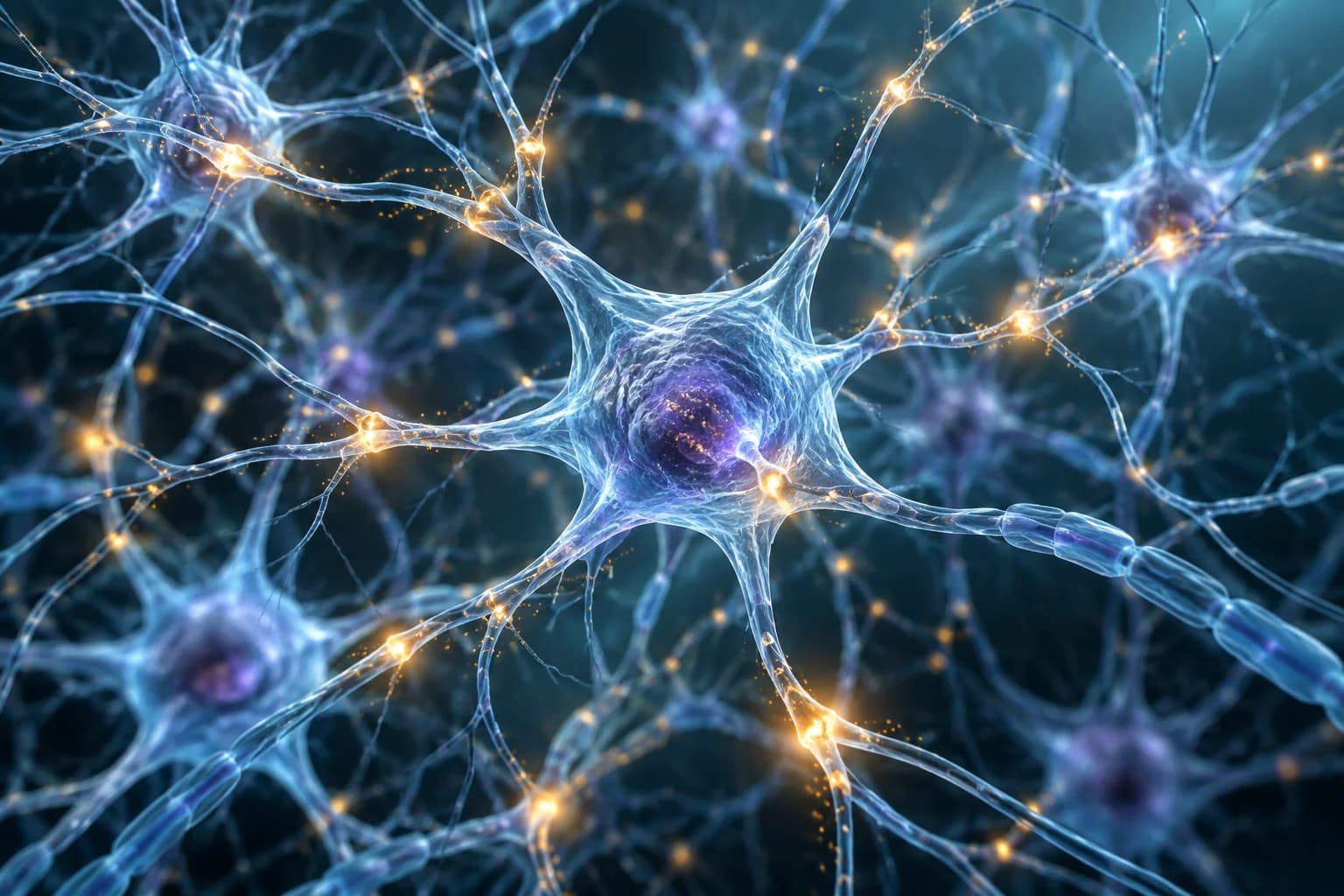
Conceptual artwork for the care discussion. Individual findings and treatment options require clinical evaluation.
- Multi-Domain Evaluation
- Cross-Trained, Provider-Led Care
- One Integrated Recovery Plan
- Rehabilitation Throughout
- Clear Evidence, Honest Guidance, Shared Decisions
- Transparent Fees
What is happening in your nervous system
Chronic alcohol exposure injures the brain and nervous system across multiple domains. In Domain 1, alcohol disrupts the neural networks that support decision-making and impulse control. In Domain 4, it impairs mitochondrial function and cerebral energy metabolism, contributing to persistent cognitive fatigue. In Domain 6, the craving circuitry is remodeled: the ventral striatum becomes hyperactive to alcohol-related cues while prefrontal top-down control becomes hypoactive — making suppression of craving extremely difficult without clinical support. In Domain 7, the environment — relationships, stressors, routines — can drive relapse even when the biological picture is improving. Neuregen addresses all four domains in a coordinated program.
Domains most involved:
Every plan starts from the same map: the 7 Domains of Recovery.
How it fits your plan
We begin with evaluation across all seven domains, identifying which barriers to recovery are most active. The program is sequenced: addiction psychiatry, psychotherapy, nutritional and metabolic rehabilitation, and neurorehabilitation are the foundation. Medically appropriate withdrawal management is addressed when required. Ketamine in selected cases, and SGB or auricular acupuncture as adjuncts, are introduced at the right stage of recovery based on the individual clinical picture — not as first-line interventions. Environmental restructuring and relapse-prevention work are integrated throughout. We default to the simplest, lowest-risk intervention that can move a domain forward — and escalate to more advanced or interventional care only when the evidence and the patient’s course support it.
If thinking, sleep or balance still feel different in sobriety, those concerns belong alongside your recovery support. We evaluate the interacting domains before considering any additional therapy; this program does not replace withdrawal management or ongoing addiction care.
When rehabilitation alone gets you most of the way but a barrier remains, we can medically escalate inside the same clinical relationship instead of referring you out.
We review your history, explain the findings, agree on next steps and check how you respond.
Potential Therapies
We use established medicine where it works, and emerging medicine where it makes sense.
These are options to discuss after evaluation, not a predetermined treatment plan. Each label refers to the condition or indication described beside that therapy; evidence can differ for another use. An evidence label does not mean FDA approval.
- Addiction Psychiatry & PsychotherapyEvidence: Established
Core intervention for craving, psychological adaptation, and behavioral recovery.
- Nutritional & Metabolic RehabilitationEvidence: Established
Addressing CNS injury from chronic alcohol exposure in Domain 4.
- NeurorehabilitationEvidence: Established
Restoring neural network function and cognitive capacity in Domain 1.
- Environmental RestructuringEvidence: Established
Relapse-prevention and Domain 7 intervention, integrated throughout the program.
- Ketamine for AUD & Craving RecoveryEvidence: Emerging
In selected cases; emerging evidence for AUD craving recovery per guide Part 7.
- Ketamine-Assisted Psychotherapy (KAP)Evidence: Emerging
Psychiatric integration of ketamine within a structured psychotherapy program.
- Stellate Ganglion Block (SGB)Evidence: Preliminary
As an adjunct in presentations with significant autonomic dysregulation.
- Auricular AcupunctureEvidence: Emerging
Adjunct for craving and autonomic settling during early recovery; never the plan on its own.
Where the evidence stands
Evidence varies by therapy and by condition. Each therapy on this page carries its own evidence label for this condition, from established to investigational.
Sources and what they support
- NIAAA: evidence-based treatment options for alcohol use disorder
Evidence-based alcohol care includes behavioral treatment and approved medications. Adjunctive brain-recovery procedures do not replace addiction care or medically supervised withdrawal when needed.
How we grade evidence
Which of these is you?
For the patient
I have alcohol use disorder.
You’re ready to take recovery seriously — and you want a program that addresses the neurological and physiological dimensions, not just abstinence. Explore what a multi-domain CNS recovery program looks like.
Mode of care: Reversal
Explore Advanced RecoveryFor a loved one
Someone I love is struggling.
Watching someone you care about caught in this cycle is exhausting. We can help you understand what’s happening neurologically and what a comprehensive recovery program at Neuregen involves.
Mode of care: Reversal
Find Options for Someone You LoveFor the worried or unsure
I’m concerned about my relationship with alcohol.
A strategy consultation with our clinical team is the right starting point — to understand whether what you’re experiencing warrants a thorough evaluation, not to commit to a program.
Mode of care: Active Prevention
Explore Testing & Early EvaluationActive Prevention, Reversal and Optimization are the three modes of care every plan is built in. How the modes differ
The training behind this care
Neuregen brings brain rehabilitation and integrative psychiatric care into one discussion, including the routines and relationships that support recovery. We coordinate goals with existing care rather than reducing recovery to a single intervention.
Dr. David George: Board certifications and training in functional neurology, integrative psychiatry, and mental health; certified brain injury specialist.
These are the founder’s qualifications. We confirm the treating clinician and their role when discussing your plan.
See Dr. George’s full credentialsFrequently asked questions
How is Neuregen’s AUD program different from a conventional addiction program?
Neuregen frames AUD recovery as rehabilitation of the brain and nervous system after chronic alcohol exposure — not solely as behavioral management. The program addresses neural network dysfunction (Domain 1), metabolic CNS injury (Domain 4), craving and psychological adaptation (Domain 6), and environmental factors (Domain 7) together. Standard addiction programs rarely address all four.
Does Neuregen manage withdrawal?
Medically appropriate withdrawal management is addressed when required. Neuregen does not provide inpatient detox, but coordinates and refers when that level of care is indicated before beginning a rehabilitation program.
Is ketamine part of every AUD program?
No. Ketamine is used in selected cases where the clinical picture supports it and is labeled as emerging evidence for this indication. The program begins with the simplest, lowest-risk interventions and escalates to advanced therapies only when the evidence and the patient’s course support it.
What does the escalation approach mean in AUD recovery?
Neuregen defaults to the simplest, lowest-risk intervention that can move a domain forward, and escalates to more advanced care only when the evidence and the patient’s course support it. For AUD this means psychotherapy and metabolic rehabilitation before ketamine; SGB as an adjunct, not a first step.
Is this program appropriate for someone who has relapsed multiple times?
Yes. Repeated relapse often reflects untreated neurological and autonomic dysfunction, not simply willpower. A comprehensive evaluation across the seven domains can identify what has been missed and inform a more complete recovery plan.
Start with a Strategy Consultation
You may already be doing the work of recovery while struggling with memory, sleep or daily responsibilities. Bringing those difficulties into a clinical conversation can clarify what needs attention alongside your current support.
8090 N. 85th Way, Suite 100, Scottsdale, AZ 85258 · Mon–Thu, 9:00 AM – 5:30 PM