
Start with what life feels like now
How can care connect immune reactions and neurologic symptoms?
We help people with unpredictable reactions, fatigue and brain fog by examining immune symptoms alongside other systems so that they can work toward a day that is easier to plan.
How we look at the whole picture
A meal, a smell or an ordinary outing can leave you feeling unwell, and the pattern is difficult to explain.
You may be tracking triggers while also dealing with poor sleep, fatigue or trouble thinking clearly.
You do not need to know which treatment to ask for. Start with what has changed and what you want to be able to do again.
In their own words
We understand your experience of Complex Immune & Neuroinflammatory Presentations
People often describe it in their own words long before anyone gives it a name. If one of these sounds like you, you are in the right place.

“My symptoms got dramatically worse after moving into a new building or after water damage.”

“I have widespread inflammation but my standard labs keep coming back unremarkable.”

“I’ve been told it’s MCAS, mold illness, or autoimmune — the diagnosis keeps changing.”

“My brain fog, fatigue, and mood symptoms are as bad as the physical ones.”
Illustrative experiences, in the words people commonly use. The portraits are AI-generated and do not show patients.
The 7 Domains of Recovery™
Your symptoms may belong in the same conversation.
Immune symptoms can coexist with changes in energy, autonomic responses and concentration. We look across the seven domains without assuming that one label explains everything.
Neuregen's proprietary 7 Domains of Recovery framework organizes that conversation around seven connected parts of your life and health. We consider all seven, then focus the evaluation on the questions your history raises.
Explore our clinical framework- 1Brain function & neural networks
What has changed in your memory, concentration, balance or sensory tolerance?
- 2Autonomic & nervous system regulation
What happens when you stand, move, rest or encounter stress?
- 3Immune function & neuroinflammation
What immune history, reactions or symptoms need a closer look?
- 4Brain energy & metabolic health
What affects your energy through the day and after activity?
- 5Structure, stability & body-to-brain signals
How do pain, posture, movement and stability affect what you can do?
- 6Psychological flexibility & behavioral recovery
How are mood, stress and patterns of coping affecting your day?
- 7Life, relationships & environment
What demands, relationships and support shape your recovery?
A plan starts with the things you want to do again.
We review the timing of symptoms, suspected triggers, prior diagnoses and current care. Testing is chosen to answer specific questions rather than adding a standard panel for everyone.
01
Tell us what you want your life to look like
We start with what has changed, what you have tried, and the activities you most want to return to.
02
Answer the questions the history leaves open
We review prior reports and select relevant assessments. You should understand what each assessment is meant to clarify.
03
Agree on the priorities and the first steps
We discuss the findings, possible approaches, costs and practical constraints. The plan sets an order that fits your situation.
04
Check what changes and adjust together
We compare your response with the starting point, including daily function. If something is not helping, we discuss what needs to change.
Only then do we discuss which therapies, if any, belong in your plan. The choice depends on the findings, the evidence, your preferences and how you respond.
Talk through your situationRecovery Pathway
Complex Immune & Neuroinflammatory Presentations
When the immune system and brain are working against each other
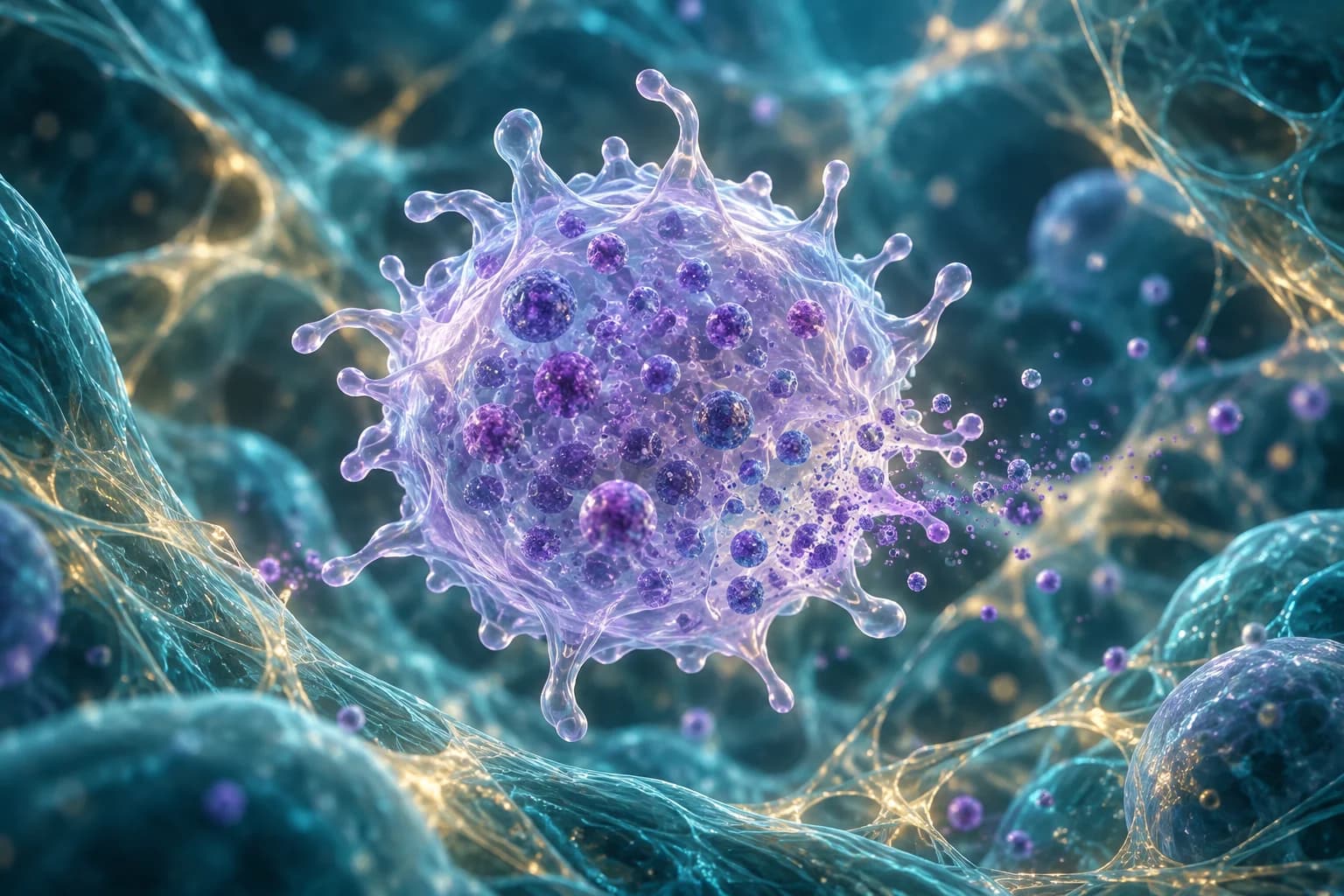
Conceptual artwork for the care discussion. Individual findings and treatment options require clinical evaluation.
What is happening in your nervous system
Complex immune and neuroinflammatory illness is driven by persistent activation of innate and adaptive immune pathways — including mast cells, microglia, and cytokine networks — that generate neuroinflammation and impair brain function. Domain 3 is the primary site: dysregulated immune signaling disrupts the blood-brain barrier, activates microglia, and produces brain fog, fatigue, and sickness behavior. Domain 2 is affected because immune-autonomic crosstalk is extensive: inflammation alters heart rate variability and orthostatic tolerance. Domain 7 is not peripheral here — environmental exposures such as mold are often the primary driver, and removal of the exposure is a prerequisite for recovery, not an afterthought.
Domains most involved:
Every plan starts from the same map: the 7 Domains of Recovery.
How it fits your plan
Environmental assessment and exposure remediation are addressed first — recovery cannot proceed while the driver of immune activation remains in place. We then address the immune and inflammatory picture with the most established tools, then the autonomic picture, then more advanced interventions when the clinical case supports them. TPE and EBOO are labeled investigational or emerging for these presentations and are offered with explicit informed consent and clear evidence-level labeling. We default to the simplest, lowest-risk intervention that can move a domain forward — and escalate to more advanced or interventional care only when the evidence and the patient’s course support it.
We review your history, explain the findings, agree on next steps and check how you respond.
Potential Therapies
We use established medicine where it works, and emerging medicine where it makes sense.
These are options to discuss after evaluation, not a predetermined treatment plan. Each label refers to the condition or indication described beside that therapy; evidence can differ for another use. An evidence label does not mean FDA approval.
- Environmental & Exposure AssessmentEvidence: Established
Prerequisite: identify and remediate the driving exposure before clinical treatment proceeds.
- Conventional Immune-Directed Medical ManagementEvidence: Established
Most-established first; appropriate supportive care per the clinical picture.
- Autonomic RehabilitationEvidence: Established
Addressing the Domain 2 autonomic picture.
- Therapeutic Plasma Exchange (TPE)Evidence: Investigational
For mold-related neurologic illness; investigational per guide Part 7.
- EBOOEvidence: Investigational
Metabolic and neuroinflammatory support; investigational adjunct.
Where the evidence stands
Evidence varies by therapy and by condition. Each therapy on this page carries its own evidence label for this condition, from established to investigational.
How we grade evidence
Frequently asked questions
What is neuroinflammatory illness?
Neuroinflammatory illness occurs when immune activation produces persistent inflammatory signaling in or near the brain — activating microglia, disrupting the blood-brain barrier, and impairing cerebral blood flow regulation. The result is brain fog, cognitive dysfunction, fatigue, and mood changes that track with the inflammatory state rather than with structural damage.
Is mold exposure a legitimate cause of neurological symptoms?
Mold and biotoxin exposure is recognized as a driver of mast cell activation, neuroinflammation, and autonomic dysfunction in susceptible individuals. Domain 7 assessment — identifying and addressing the exposure — is a prerequisite for recovery in these cases, not optional.
Is TPE a standard treatment for mold or environmental illness?
No. TPE for mold-related neurologic illness is labeled investigational at Neuregen — early evidence or strong mechanistic rationale, offered with explicit informed consent and no outcome guarantee. Honest labeling is central to how Neuregen operates.
How does immune activation affect the autonomic nervous system?
Immune-autonomic crosstalk is extensive. Cytokines and inflammatory mediators alter sympathetic tone, reduce heart rate variability, and impair orthostatic responses — producing autonomic instability that parallels the neuroinflammatory picture. Addressing both together is more effective than treating either in isolation.
Start with a Strategy Consultation
A real clinical conversation, not a sales call. We review your history, answer your questions, and discuss with you whether Neuregen is the right fit.
8090 N. 85th Way, Suite 100, Scottsdale, AZ 85258 · Mon–Thu, 9:00 AM – 5:30 PM