
Start with what life feels like now
What if you still feel different after COVID?
We help people with symptoms that linger after illness by examining the systems affecting recovery so that they can work toward daily activity at a manageable pace.
How we look at the whole picture
The infection has passed, but you still cannot get through a normal day the way you used to.
A better morning can be followed by a setback after an errand or activity that once felt easy.
You do not need to know which treatment to ask for. Start with what has changed and what you want to be able to do again.
In their own words
We understand your experience of Long COVID
People often describe it in their own words long before anyone gives it a name. If one of these sounds like you, you are in the right place.

“I haven’t been the same since COVID — months or years later.”

“I was told I’m recovered but I still can’t function the way I could before.”

“My brain fog, fatigue, dizziness, and breathlessness have never gone away.”

“Every specialist treats one piece — no one addresses the full picture.”
Illustrative experiences, in the words people commonly use. The portraits are AI-generated and do not show patients.
The 7 Domains of Recovery™
Your symptoms may belong in the same conversation.
Energy, autonomic responses, cognition, sleep and immune concerns may overlap after an illness. The seven domains give us a way to assess the whole pattern.
Neuregen's proprietary 7 Domains of Recovery framework organizes that conversation around seven connected parts of your life and health. We consider all seven, then focus the evaluation on the questions your history raises.
Explore our clinical framework- 1Brain function & neural networks
What has changed in your memory, concentration, balance or sensory tolerance?
- 2Autonomic & nervous system regulation
What happens when you stand, move, rest or encounter stress?
- 3Immune function & neuroinflammation
What immune history, reactions or symptoms need a closer look?
- 4Brain energy & metabolic health
What affects your energy through the day and after activity?
- 5Structure, stability & body-to-brain signals
How do pain, posture, movement and stability affect what you can do?
- 6Psychological flexibility & behavioral recovery
How are mood, stress and patterns of coping affecting your day?
- 7Life, relationships & environment
What demands, relationships and support shape your recovery?
A plan starts with the things you want to do again.
We ask what activity feels like during and afterward, review prior evaluations, and establish a baseline. Your tolerance and response help set the pace of the plan.
01
Tell us what you want your life to look like
We start with what has changed, what you have tried, and the activities you most want to return to.
02
Answer the questions the history leaves open
We review prior reports and select relevant assessments. You should understand what each assessment is meant to clarify.
03
Agree on the priorities and the first steps
We discuss the findings, possible approaches, costs and practical constraints. The plan sets an order that fits your situation.
04
Check what changes and adjust together
We compare your response with the starting point, including daily function. If something is not helping, we discuss what needs to change.
Only then do we discuss which therapies, if any, belong in your plan. The choice depends on the findings, the evidence, your preferences and how you respond.
Talk through your situationNamed Condition Hub
Long COVID
A Long COVID diagnosis means the evaluation is just beginning
Clinically: Persistent post-acute sequelae of SARS-CoV-2 infection — neuroinflammatory, autonomic, metabolic, and neural network disruption sustained beyond the acute illness.
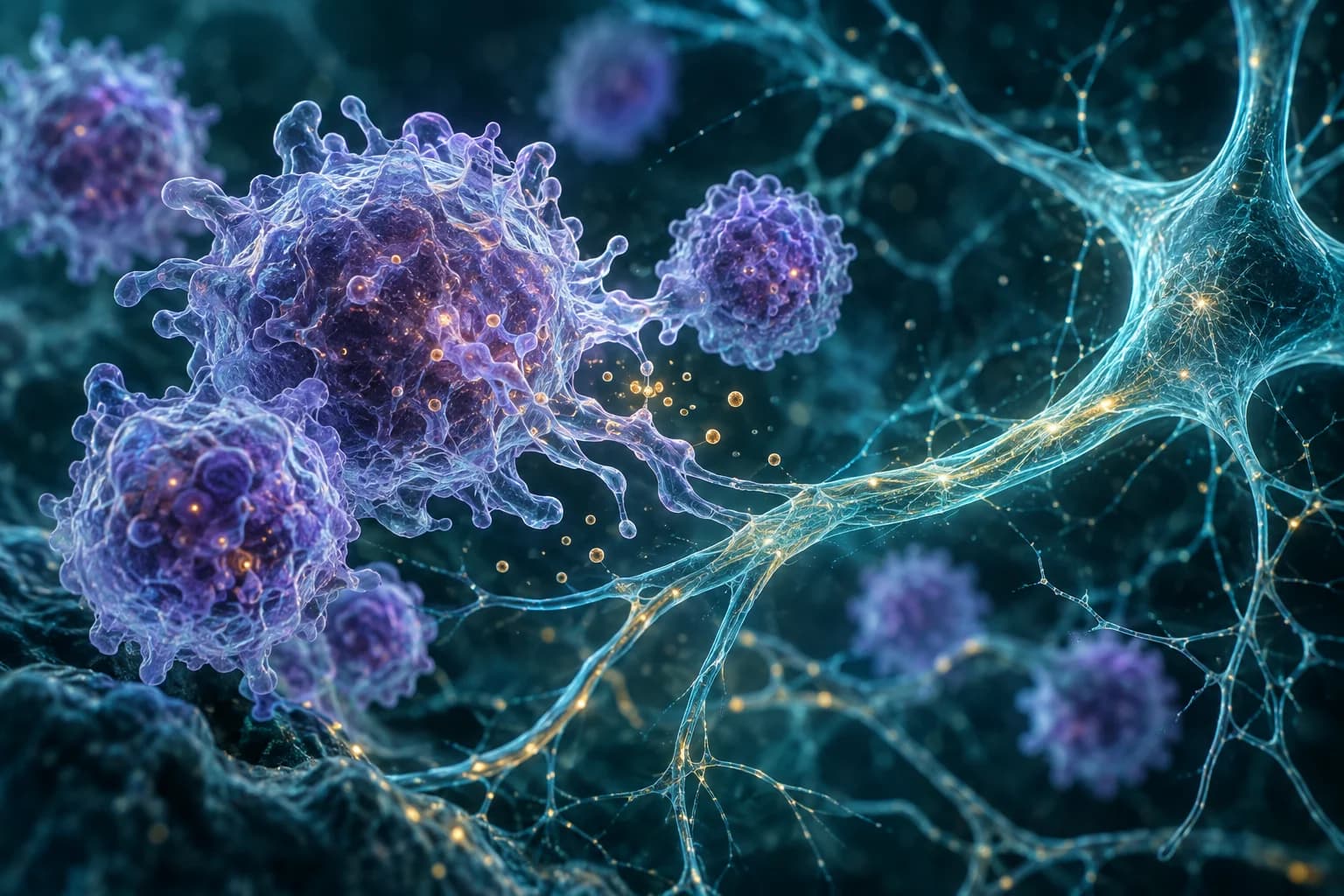
Conceptual artwork for the care discussion. Individual findings and treatment options require clinical evaluation.
What is happening in your nervous system
Long COVID creates overlapping disruptions across multiple domains simultaneously. Persistent neuroinflammation (Domain 3) drives brain fog, cognitive dysfunction, and sickness behavior through microglial activation and blood-brain barrier disruption. Brain energy and mitochondrial function (Domain 4) are impaired — contributing to the profound fatigue that characterizes post-COVID presentations and the inability to sustain exertion. Autonomic dysregulation (Domain 2) contributes to orthostatic intolerance, palpitations, and exertional limitation that overlap with POTS. Neural network function (Domain 1) suffers when reduced cerebral blood flow from autonomic and inflammatory disruption impairs connectivity and processing speed. These domains interact: immune activation suppresses autonomic regulation; autonomic dysfunction reduces oxygen delivery to already-compromised brain circuits. If POTS is a specific named diagnosis alongside Long COVID, the POTS hub addresses the autonomic picture in more detail.
Domains most involved:
Every plan starts from the same map: the 7 Domains of Recovery.
How it fits your plan
We evaluate all four primary domains and identify the pattern specific to your presentation — whether neuroinflammatory, metabolic, autonomic, or a combination. We sequence interventions starting with the most established: autonomic rehabilitation, supportive nutritional and metabolic care, functional neurology assessment, and graded return to activity with appropriate pacing. Therapeutic plasma exchange and EBOO for Long COVID carry emerging and investigational evidence respectively — they are introduced when the clinical picture and the evidence support them, not as first-line interventions. SGB for POTS-dominant autonomic symptoms is labeled preliminary. The Post-Viral Recovery pathway page covers the broader category of post-viral illness for patients without a specific Long COVID diagnosis.
We review your history, explain the findings, agree on next steps and check how you respond.
Potential Therapies
We use established medicine where it works, and emerging medicine where it makes sense.
These are options to discuss after evaluation, not a predetermined treatment plan. Each label refers to the condition or indication described beside that therapy; evidence can differ for another use. An evidence label does not mean FDA approval.
- Functional Neurology AssessmentEvidence: Established
Autonomic screen, orthostatic vitals, HRV, and cognitive function baseline.
- Autonomic RehabilitationEvidence: Established
Graded reconditioning, pacing, and HRV biofeedback for Domain 2.
- Nutritional & Metabolic SupportEvidence: Established
Supporting Domain 4 brain energy and mitochondrial function.
- Stellate Ganglion Block for POTS & DysautonomiaEvidence: Preliminary
For Long COVID presentations with dominant autonomic and POTS symptoms.
- Therapeutic Plasma Exchange (Long COVID)Evidence: Emerging
For neuroinflammatory post-COVID presentations; AMA-cited in guide Part 5.
- EBOO (Brain Energy Support)Evidence: Investigational
Metabolic and neuroinflammatory support; investigational adjunct.
Where the evidence stands
Evidence varies by therapy and by condition. Each therapy on this page carries its own evidence label for this condition, from established to investigational.
Sources and what they support
- CDC clinical overview of Long COVID
Background on Long COVID and its effects across body systems. This overview does not establish the effectiveness of TPE, EBOO or SGB for Long COVID.
How we grade evidence
Frequently asked questions
What is the difference between this Long COVID hub and the Post-Viral Recovery pathway?
The Post-Viral Recovery pathway is a symptom-pattern entry point — for patients who recognize post-viral brain fog, fatigue, and autonomic symptoms but may not yet have a Long COVID diagnosis. This hub is for patients who already carry a Long COVID (PASC) diagnosis and want to understand the specific program Neuregen builds around it.
Is TPE a standard treatment for Long COVID?
Therapeutic plasma exchange for Long COVID is labeled as emerging evidence at Neuregen — not yet a standard of care. It is considered when the neuroinflammatory and immune picture is a dominant feature, and after more established interventions are in place. Honest labeling of evidence is how Neuregen operates.
Does Long COVID cause POTS?
Post-viral autonomic dysregulation, including POTS, is a recognized outcome of COVID-19. The Long COVID hub and the POTS hub are designed to address the overlap — if you carry both diagnoses, both pages are relevant to how Neuregen sequences your care.
How does Neuregen handle post-exertional malaise in Long COVID?
Post-exertional malaise is a real phenomenon in Long COVID. Neuregen does not push activity before the autonomic and metabolic picture supports it. Graded exertional rehabilitation is introduced progressively and paced to the individual’s response, not to a generic timeline.
Start with a Strategy Consultation
A real clinical conversation, not a sales call. We review your history, answer your questions, and discuss with you whether Neuregen is the right fit.
8090 N. 85th Way, Suite 100, Scottsdale, AZ 85258 · Mon–Thu, 9:00 AM – 5:30 PM