

Neuregen · Scottsdale, Arizona · 866-999-1177
Providers – Refer Your Patient

Blood Rehabilitation Therapies

When your body feels overloaded, clarity can feel out of reach.

Neuregen’s Blood Rehabilitation Therapies are designed for people whose brain and nervous-system recovery may be limited by persistent inflammation, immune dysregulation and other harmful circulating factors. By integrating therapeutic plasma exchange (TPE; plasmapheresis), the EBO2 protocol and brain rehabilitation, we work to improve the internal environment in which the brain is trying to heal — so rehabilitation can gain traction and you can think more clearly, function more fully and reclaim more of your life.

Explore How Blood Rehabilitation Works
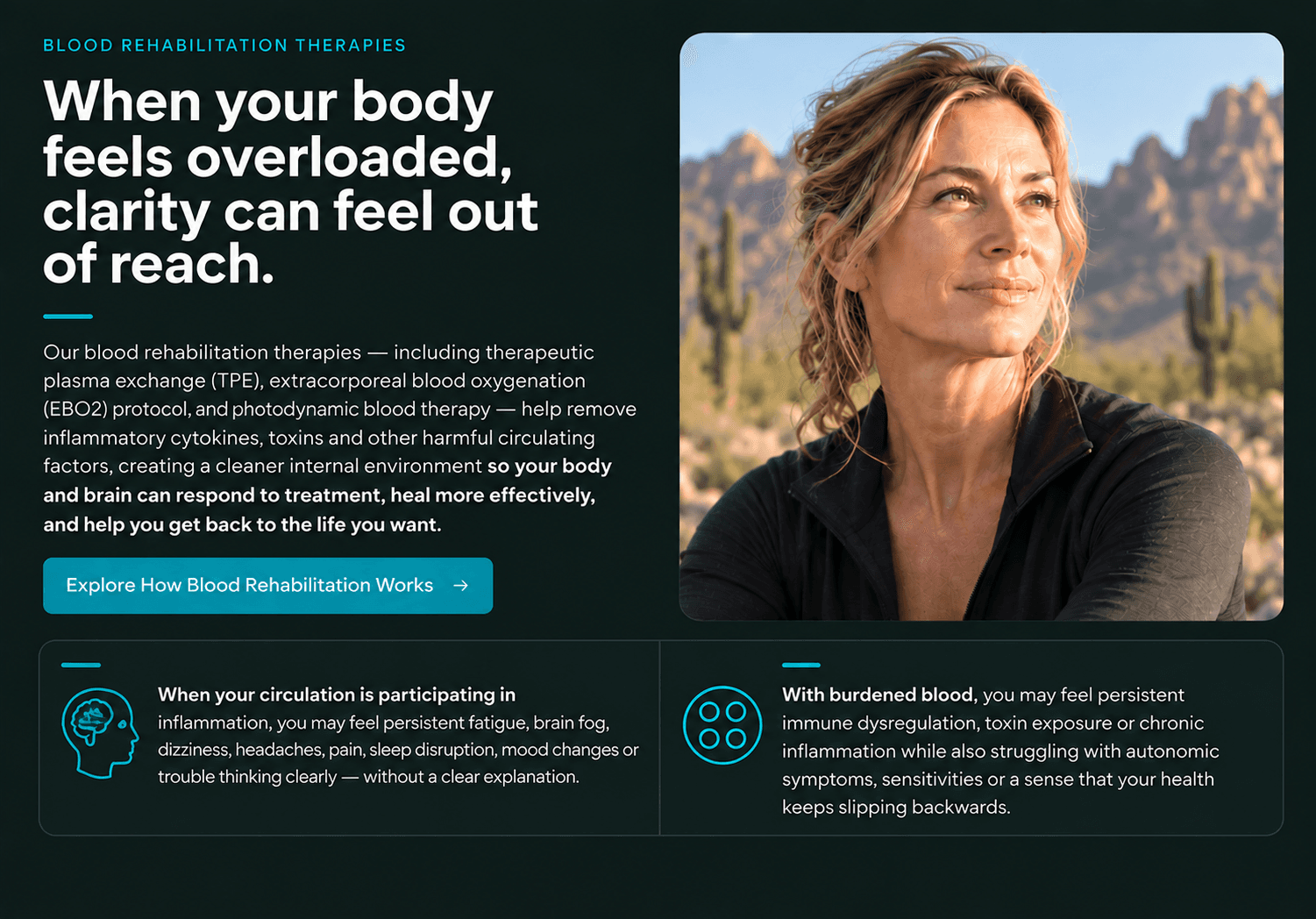
Illustrative portrait of a woman outdoors in an Arizona desert landscape.
  • Clarity and energy feel hard to hold onto. You may be dealing with fatigue, brain fog, dizziness, headaches, pain, disrupted sleep or mood changes — without a clear explanation.

  • Symptoms keep interrupting your progress. Immune concerns, an exposure history or recurring flares may sit alongside sensitivities, autonomic symptoms and a sense that your health keeps slipping backwards.

What your blood can carry, how blood rehabilitation fits inside a brain rehabilitation plan, and what a session is like.
Read the full transcript

Brain fog. Fatigue that doesn't lift. A brain that feels like it's running on empty. Your blood carries more than nutrients. It can transport the inflammation and toxins working against your brain and nervous system. Blood rehabilitation clears that burden and gives your brain a clear foundation to work from. We rarely offer this as a standalone therapy. It's part of a holistic brain rehabilitation plan, which is something almost no one else is offering. You'll be comfortable in a recliner the whole time. We'll be checking on you throughout, and most of the time people just relax, read, or watch TV. It's a calm couple of hours, not a big ordeal. If this sounds like something your brain needs, let's talk about whether this is right for you.

The 7 Domains of Recovery™

Blood Circulates Everywhere.

What it carries can influence your health.

The brain does not recover in isolation. Circulating immune and inflammatory factors can affect its function. Understanding whether those factors are contributing to your symptoms helps us decide what to address.

Neuregen’s 7 Domains of Recovery™ connects that evaluation to the rest of your health. We consider where TPE, the EBO2 protocol or photodynamic blood therapy may fit — and what rehabilitation and ongoing care should happen around it.

Explore our clinical framework
  1. Brain function & neural networks

    We assess memory, attention and cognitive function, and consider whether a diagnosed immune or inflammatory condition may be contributing to changes.

  2. Autonomic & nervous system regulation

    We look at dizziness, heart-rate changes and stress responses alongside immune findings, medications and other possible drivers of autonomic symptoms.

  3. Immune function & neuroinflammation

    TPE can remove circulating antibodies and other plasma components. We ask whether there is a clinically meaningful target and evidence for treating the specific condition.

  4. Brain energy & metabolic health

    Fatigue and reduced stamina can have several causes. We consider sleep, nutrition, metabolic health and relevant lab findings alongside the rest of your evaluation.

  5. Structure, stability & body-to-brain signals

    Pain, balance and joint stability still need their own assessment. Movement and physical rehabilitation remain part of the plan when these factors limit function.

  6. Psychological flexibility & behavioral recovery

    We track mood, sleep, coping and participation in daily life. Psychological and behavioral care can support recovery alongside treatment of physical symptoms.

  7. Life, relationships & environment

    We consider relevant exposures, daily demands, relationships and support. Addressing an ongoing exposure and building sustainable routines may matter as much as a procedure.

These domains describe what we assess and track. They are not a claim that each blood therapy improves every domain; evidence depends on the procedure and its specific use.

A plan starts with a deeper look at what’s in your blood.

We start with your history, symptoms and goals, then select targeted baseline labs. Together, those findings help determine candidacy and guide a plan built around you.

  1. Comprehensive assessment

    We review your symptoms, medical history, prior testing and goals to decide whether blood rehabilitation deserves a closer look.

  2. Targeted lab testing

    We select baseline labs around your history and the proposed procedure. Relevant findings help assess medical stability, possible treatment targets and whether it is safe to proceed.

  3. Personalized plan

    We explain your results, treatment options, evidence, risks and alternatives. Together, we decide whether a blood therapy belongs alongside your rehabilitation and other care.

  4. Monitor and adjust

    We follow symptoms, day-to-day function and relevant labs. Your response guides whether to continue, change or stop a treatment, and what comes next.

We move forward only when a therapy is an appropriate fit. The choice, sequence and frequency depend on your findings, the evidence, your goals and how you respond.

Talk through your options

Blood Rehabilitation

Blood Optimization in Brain Healing

Blood-based therapies, selected around your findings and integrated with rehabilitation to support brain and nervous-system recovery.

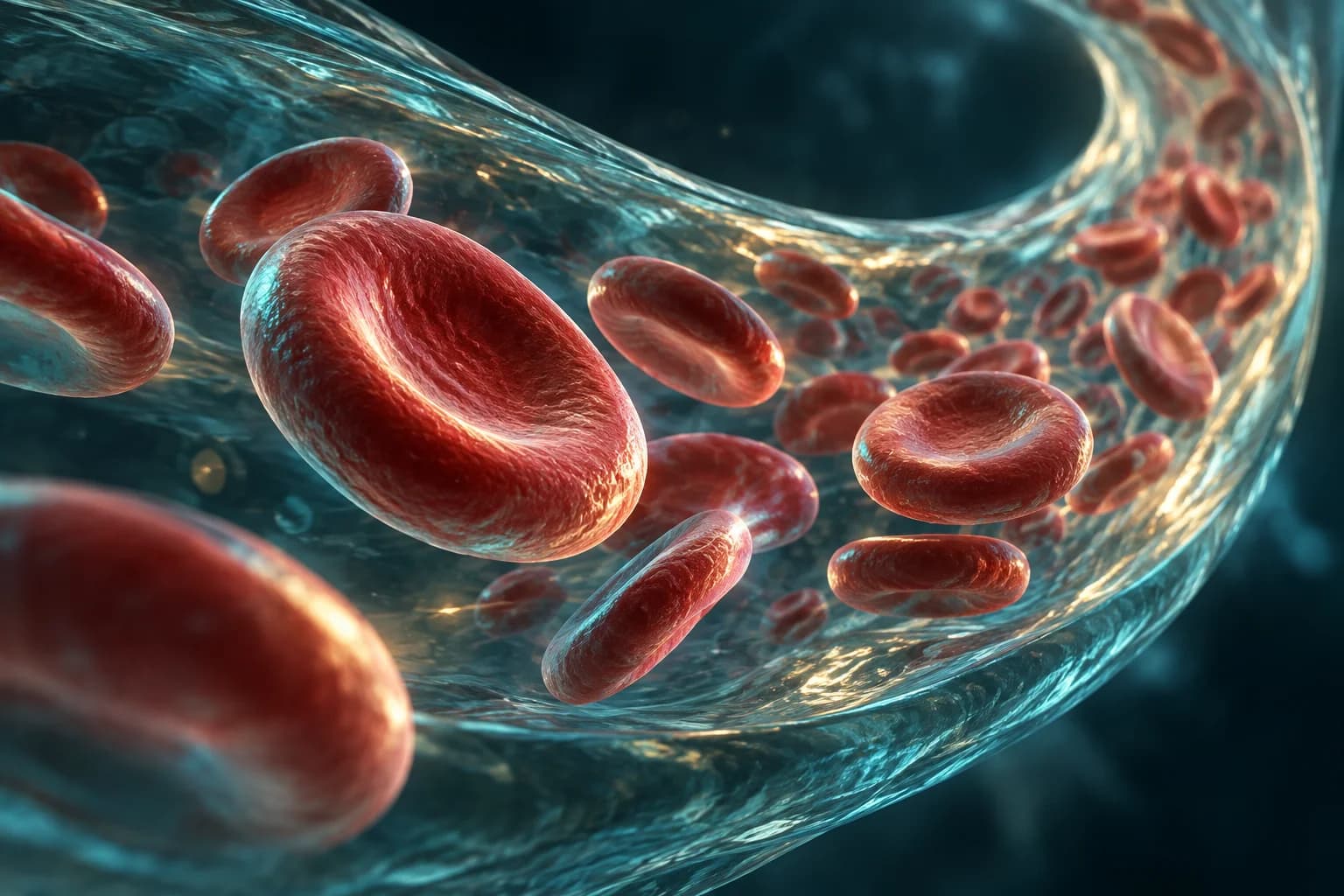
Conceptual illustration of blood cells inside a vessel; not a treatment demonstration.

The Neuregen Difference

“Blood therapies are being increasingly adopted by cutting-edge medical and regenerative clinics. Neuregen’s approach is unique because these therapies are integrated into a broader brain, nervous system, and functional rehabilitation model.”

Blood therapies only make sense in relation to a specific clinical question. We review the indication, evidence and risks for TPE or EBOO separately, then consider whether either has a role alongside rehabilitation and your existing medical care.

Blood therapies are tools. The differentiator is the clinical reasoning system that determines which tools belong together, for which patient, in what sequence, and toward what measurable recovery goals.

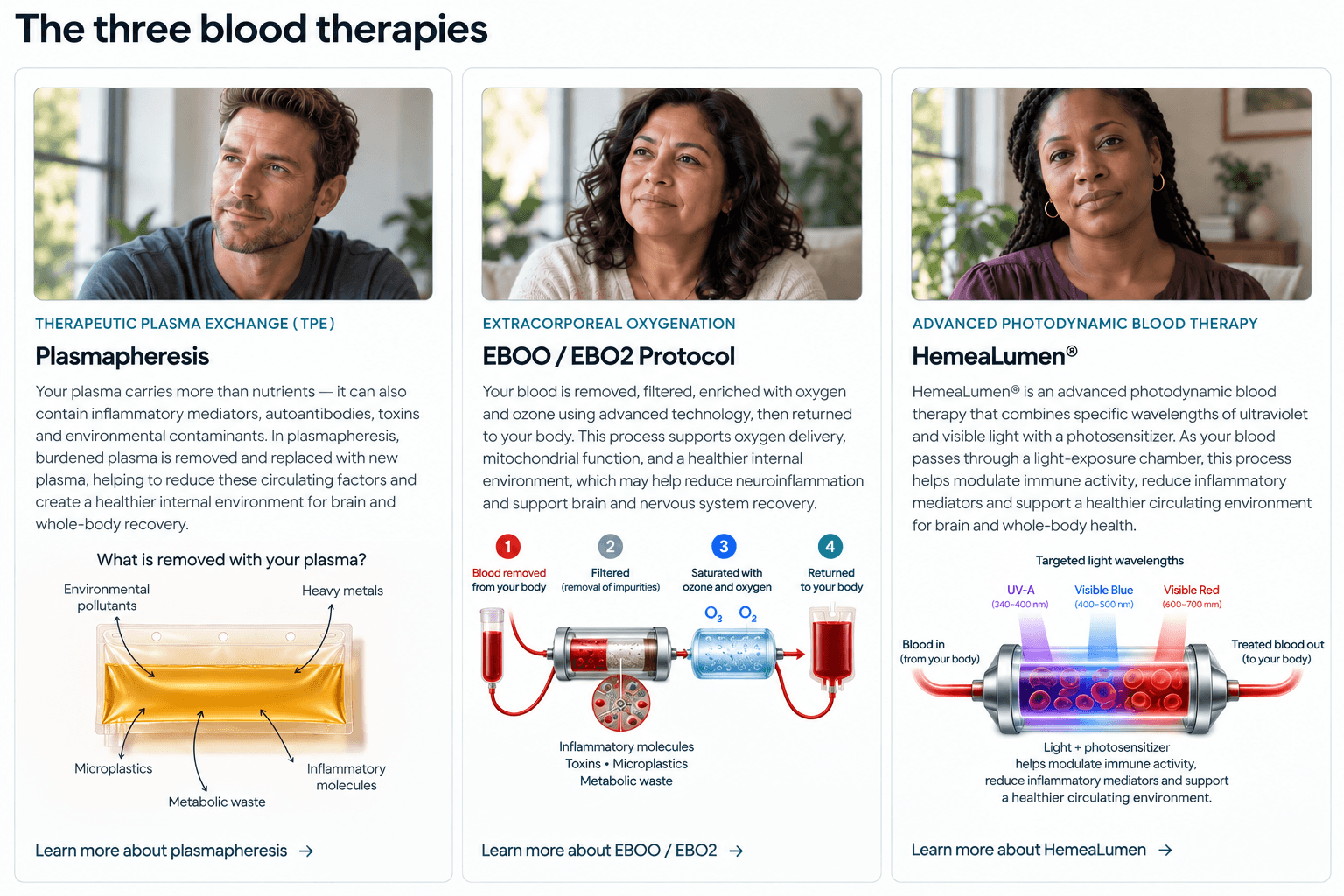
The three blood therapies

Therapeutic Plasma Exchange (TPE)

Plasmapheresis

Plasma carries proteins, antibodies and other circulating substances. TPE removes plasma and replaces it with selected fluid while returning your blood cells. It can help in conditions where specific plasma components contribute to illness.

Plasma is exchanged. Blood cells return.

Plasma is separated and removed. Your blood cells return with replacement fluid, usually albumin or donor plasma, selected for the procedure.

Learn more about plasmapheresis

Extracorporeal Oxygenation

EBOO / EBO2 Protocol

Blood passes through an external circuit for oxygen–ozone exposure before returning to the body. EBO2 is a name used for related protocols. Proposed effects on inflammation and brain function remain under investigation.

An external blood-treatment circuit
  1. Blood enters an external circuit
  2. Oxygen–ozone exposure
  3. Blood returns to the body

Equipment and protocol steps vary. This process differs from removing and replacing plasma in TPE.

Learn more about EBOO / EBO2

Photodynamic Blood Therapy

HemeaLumen

HemeaLumen treats a portion of blood outside the body using controlled, multiwavelength light before returning it. The proposed biological effects and potential clinical uses require evaluation for the specific condition being treated.

A controlled light-treatment circuit
  1. Blood enters an external circuit
  2. Controlled light exposure
  3. Blood returns to the body

The manufacturer describes a multiwavelength light system. The specific protocol and clinical evidence should be discussed separately.

Learn more about HemeaLumen

The device description explains how blood is exposed to light; it does not establish that the procedure improves dementia, brain fog or other neurologic conditions.

It should not be confused with conventional extracorporeal photopheresis, which uses a light-activated drug and ultraviolet light for specific conditions. Evidence for that procedure cannot automatically be applied to HemeaLumen.

Before proceeding, we discuss the exact protocol, evidence for your condition, regulatory status, risks, alternatives and how a response would be measured.

NCI: what conventional photopheresis involves

Diagrams show the basic processes; they do not demonstrate treatment benefit or removal of every harmful substance. The evidence for each therapy depends on what it is used for; see the evidence for each use. Your evaluation determines which therapy, if any, belongs in your plan.

Where blood therapies may be considered

Evidence differs by procedure and by condition. These topics may enter an evaluation; their inclusion here does not mean a blood therapy is appropriate for every person.

  • Alzheimer’s & Cognitive Decline

    Neuregen integrates AMBAR-informed plasma exchange into a comprehensive cognitive program that includes diagnostics, brain rehabilitation, metabolic support, and a caregiver pathway.

  • Mold / Environmental & CIRS-Related Neurologic Illness

    In selected patients with complex neurologic illness linked to mold or environmental exposure, TPE may be considered alongside Domain 3 (Immune & Neuroinflammatory Regulation) and Domain 7 (Environmental Context). Exposure assessment is part of the plan, not only the infusion.

  • Long COVID & Post-Viral Neuropsychiatric Symptoms

    Blood rehabilitation in the context of Long COVID and post-viral syndromes draws on Neuregen’s integration of Domains 1, 2, 3, and 4 — neurorehabilitation, autonomic regulation, immune biology, and metabolic support in one coordinated plan.

  • MCAS with CNS- and Psychiatric-Dominant Symptoms

    Mast Cell Activation Syndrome with nervous-system-dominant symptoms is a named flagship condition in Neuregen’s clinical framework. Psychiatric integration alongside blood rehabilitation is what lets the plan address the nervous-system side of MCAS, not only the immune side.

Our Commitment to Transparency

Where the Evidence Stands

We label evidence for the specific use of a therapy. Your plan also considers safety, alternatives and your goals.

Evidence for each use

  • Therapeutic plasma exchange (TPE) for selected autoimmune neurologic conditions

    Evidence: EstablishedFor selected autoimmune neurologic conditions
  • Therapeutic plasma exchange (TPE) for mild-to-moderate Alzheimer’s disease (AMBAR protocol)

    Evidence: ModerateFor the studied albumin-replacement protocol in mild-to-moderate Alzheimer’s; further confirmation is needed.
  • Therapeutic plasma exchange (TPE) for mold / environmental and CIRS-related neurologic illness

    Evidence: InvestigationalEarly-stage evidence; offered with explicit informed consent and no outcome guarantee.
  • Therapeutic plasma exchange (TPE) for long COVID and post-viral neuropsychiatric symptoms

    Evidence: InvestigationalResearchers are actively investigating plasma-based approaches for complex post-infectious conditions; evidence for these applications is still emerging.
  • Therapeutic plasma exchange (TPE) for MCAS with CNS- and psychiatric-dominant symptoms

    Evidence: InvestigationalEarly-stage evidence; offered with explicit informed consent and no outcome guarantee.
  • EBOO / EBO2 for brain and nervous-system recovery

    Evidence: InvestigationalFor brain and nervous-system recovery
  • HemeaLumen for brain and nervous-system recovery

    Evidence: InvestigationalFor brain and nervous-system recovery

Our Evidence Levels

Each level describes the evidence for a particular treatment and use. It does not guarantee a specific outcome or indicate FDA approval.

Our evidence levels and what they mean
Level 1StrongMultiple high-quality studies consistently support meaningful benefit for this use.
Level 2ModerateGood clinical evidence supports benefit, but important uncertainty remains.
Level 3EmergingEarly clinical evidence suggests potential benefit, but is not yet strong or consistent.
Level 4PreliminaryEvidence is limited to small studies, observational data or indirect clinical evidence.
Level 5InvestigationalThere is a rationale or very early evidence, but clinical benefit has not been established.

“Established” describes a recognized clinical use; it is not an automatic Level 1 or Level 2 rating.

Sources and what they support

Sources and what they support

Transparent Fees

Your plan determines the care and the fees. We explain what is included and provide a written estimate before treatment. Neuregen is an out-of-network specialty clinic.

View Blood Rehabilitation Fees

Research & Evidence

How Neuregen labels evidence, from established to investigational, for each blood therapy indication.

Evidence overview

Apheresis and environmental-medicine credentials behind this program

Neuregen brings the blood-therapy discussion into the same plan as neurologic, autonomic and functional care. We ask what a proposed intervention would change in daily life and how that change would be assessed.

Dr. David George: Board certifications and training in functional neurology, integrative psychiatry, and mental health; certified brain injury specialist.

Training most relevant to this area

  • Member, American Society for Apheresis (ASFA)
  • GCP Certified (NIDA)

These are the founder’s qualifications. We confirm the treating clinician and their role when discussing your plan.

See Dr. George’s full credentials

Frequently asked questions

What is Blood Rehabilitation?

Blood Rehabilitation is Neuregen’s category name for blood-based therapies including Therapeutic Plasma Exchange (TPE), EBOO/EBO2 and HemeaLumen photodynamic blood therapy. We consider these within a broader brain, nervous-system and functional rehabilitation plan. Their mechanisms, risks and evidence differ; inclusion in the menu does not mean each is appropriate for every condition.

Who is Blood Rehabilitation designed for?

Blood rehabilitation may be considered for selected patients with complex neurologic, neuroimmune, or post-infectious presentations — including Alzheimer’s and cognitive decline, MCAS with CNS-dominant symptoms, Long COVID-related neuropsychiatric symptoms, and mold- or CIRS-related neurologic illness. We determine whether any blood therapy belongs in a patient’s plan after a full medical review of the diagnosis, relevant evidence, risks and alternatives.

How does Neuregen differ from other blood therapy clinics?

We connect the blood-therapy evaluation to brain, nervous-system and functional rehabilitation. Your history, targeted testing and goals guide whether a procedure belongs in your care and when to use it. We track your response and coordinate rehabilitation, autonomic support, metabolic care and psychiatric care as appropriate.

Are these therapies covered by insurance?

Neuregen is an out-of-network specialty clinic. Patients are responsible for fees at the time of service. Specific fee information is provided in writing at the strategy consultation.

Do I need a referral to start?

No referral is required. The starting point is a strategy consultation to determine whether Neuregen is a clinical fit for your situation — a real clinical conversation, not a sales call. If it is, we then conduct a full medical review and build a personalized plan.

Start with a Strategy Consultation

Ongoing fatigue or difficulty thinking may already be limiting your work and family life. An evaluation can help organize what is known, what remains uncertain and whether further investigation is useful before considering blood therapy.

8090 N. 85th Way, Suite 100, Scottsdale, AZ 85258 · Mon–Thu, 9:00 AM – 5:30 PM