
Neuregen · Scottsdale, Arizona · 866-999-1177
Providers – Refer Your Patient

Video library

Every Neuregen film, in one place

We help people with questions about how Neuregen works by explaining our framework, our clinical lead and the care we offer in short films so that they can decide what they want to ask in a consultation.

8 short films, about 10 minutes in all, each with closed captions and a full transcript.

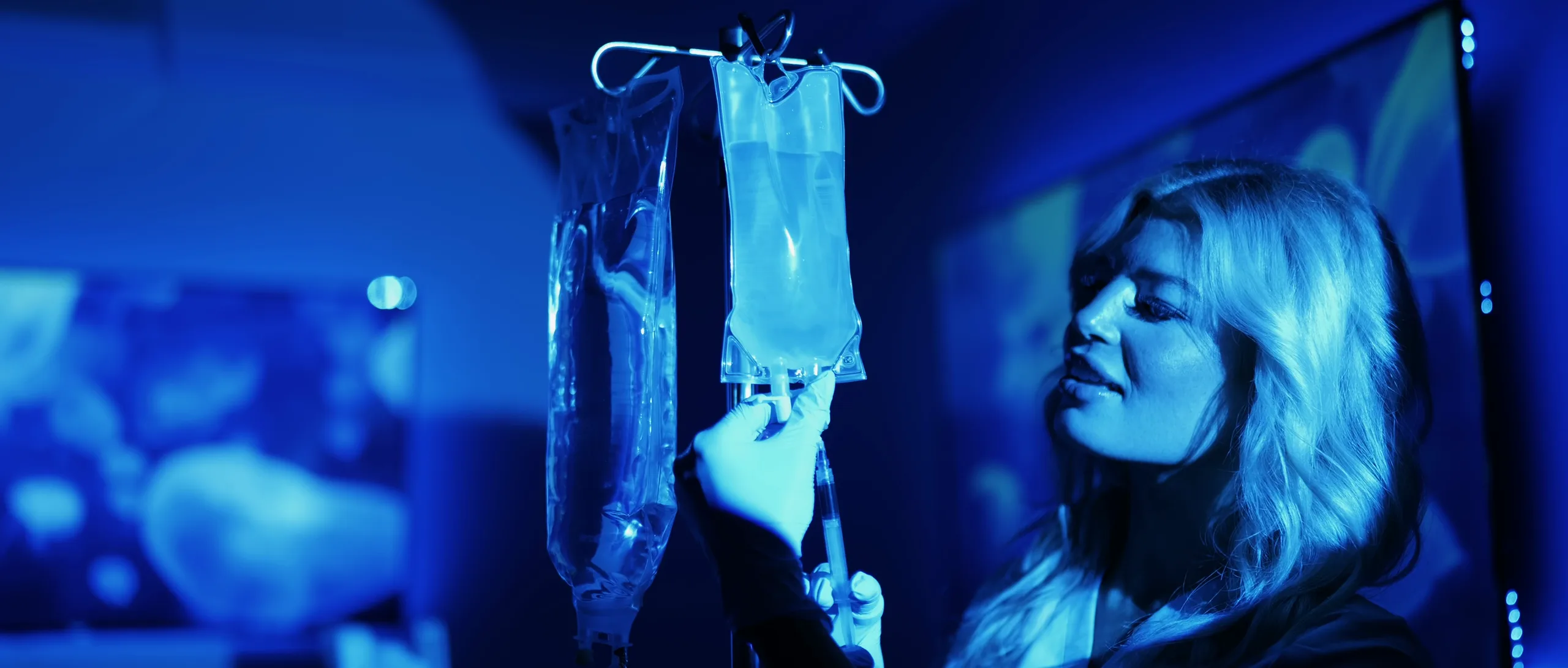
Still from the Neuregen brand film: a clinician checks an IV line in a softly lit treatment room.

Start here

Who we are

An overview of what Neuregen is and how the clinic brings care together around rehabilitation.

Neuregen: complex nervous-system recovery

Length

Neuregen is not a collection of advanced therapies. Neuregen is a clinical integration platform for complex nervous-system recovery.
Read the full transcript

Where can you actually go to put yourself back together and heal your brain? Most people that we see don't have one problem. They have a series of problems which they intuitively feel are related, but they keep getting treated by different specialties that can't connect the dots. When your immune system won't stand down, your brain pays the price. A lot of patients come to us as a last resort if they aren't finding answers from the neurologist or their primary care provider. There's a reason these symptoms feel connected. That's because they are. We call it the 7 Domains of Recovery. We believe that this approach is truly unique to our clinic and you won't find it anywhere else. We assess seven systems, build a sequenced plan and measure what's working. There's a way to open a window for real change. Every tool we use fits into your plan, not the other way around. We understand where you're coming from, and that's what Neuregen is here for. Watching someone finally feel believed is some of the most important work we do. If this sounds like something you might need, let's talk about whether this is right for you.

Also on

The 7 Domains of Recovery™

How we think about recovery

The framework behind every plan: seven connected systems we consider together before deciding what matters most.

The 7 Domains framework

Length

The question behind every plan: “What is preventing this person from recovering?” We review your history, explain the findings, agree on next steps and check how you respond.
Read the full transcript

So many of our patients tell us that up until now, they were just not being heard. What you should realize is that very often it's not due to a lack of empathy on the part of your providers. It's just that you've been working through a healthcare system that necessarily deals with specialists that view things one system at a time. For many of these conditions, we need to take a holistic, integrated approach that considers how these systems are interacting, and we treat them under one roof. How we approach the challenging problems that we see is by looking at seven domains of function. The first is brain function and neural networks. Essentially, asking the question: how are the different areas of your brain and nervous system communicating with each other and the rest of your body? The second is autonomic or nervous-system regulation, where we ask questions like: is your body stuck in a dominant fight-or-flight mode? Next is immune function and neuroinflammation, where essentially we're asking: is your immune system working against your brain and nervous system? After that is brain energy and metabolic health, where essentially we're asking: does your brain have enough energy to heal? Following that, we look at structure, stability and body-to-brain signals. Essentially, we're asking: is something physical feeding this problem? The next domain is psychological flexibility and behavioral recovery, where we're asking how your mind has adapted for survival and what that's costing you. So the final domain deals with life and your environment, because frankly, you don't heal in a vacuum, and sometimes your environment can be working against you. So what is preventing this person from recovering? That's the only question that matters. We identify it, we target it, we regulate it, and we restore health. In practice, that means your plan might include physical rehabilitation, procedures, or even talk therapy. The point is it's in an order that actually helps you; it's not a one-size-fits-all. This model is behind everything we do here, so let's find out which domains apply to you.

Your clinical lead

Who leads your care

Dr. David George, founder and clinic director, on how he approaches rehabilitation.

Meet Dr. David George

Length

Meet Dr. David George and learn how Neuregen approaches rehabilitation.
Read the full transcript

I'm David George. I'm the founder of Neuregen. So before Neuregen, I co-founded a medical device company which was awarded FDA's medical breakthrough device designation for the treatment of migraine — the first company to actually earn that designation. And I'd like to think that I bring that same degree of rigor and standards and clinical innovation to Neuregen. I'm clinically trained across three board certifications and specialty areas: functional neurology for rehabilitation of the brain and nervous system, family care for whole-person regenerative care, and integrative psychiatry for mental health, which is often treated as separate when it's really not. So why rehabilitation? So think of it this way. A physiatrist or a physical therapist doesn't compete with a cardiologist. Rather, the physical therapist or physiatrist picks up what was left behind, and we approach that in a similar way here in Neuregen. We ask what was left behind and what's standing in the way of recovery, and that's where we focus. So our approach is always to start with the simplest, lowest-risk options first, escalating only when your own needs or best evidence requires it. There's a lot more to this, and if you're ready to learn more, you can find more on our About page and the rest of this website. But if you're ready to talk about your own recovery, give us a call.

Treatments and conditions

Treatments and conditions, explained

How specific therapies and condition programs fit inside a rehabilitation plan. Whether any of them suits you depends on an individual evaluation.

Stellate ganglion block, explained

Length

What a stellate ganglion block is, why we use it inside a full autonomic rehabilitation program rather than as a standalone fix, and what the visit is like.
Read the full transcript

If your nervous system feels stuck, even when nothing's wrong, then this is for you. A stellate ganglion block is a simple injection around the C6 on the neck that is located around a bundle of nerves responsible for your fight-or-flight response. We typically use the stellate ganglion block inside a full autonomic rehabilitation program, very seldom as a standalone fix. So while this procedure has been around for some time, it's actually an emerging therapy for the treatment of PTSD and dysautonomia. Most patients are in and out within the hour. You're awake the whole time, comfortable, and we're right there with you. A lot of people notice a difference almost immediately. I find that I recommend this procedure with confidence based on what I've seen in patients and the changes that it can make. We're learning more and more about just how many conditions and how many symptoms are promoted by an overactive sympathetic nervous system, that fight-or-flight nervous system. If you're curious whether this is right for you, let's talk about it.

Blood rehabilitation, explained

Length

What your blood can carry, how blood rehabilitation fits inside a brain rehabilitation plan, and what a session is like.
Read the full transcript

Brain fog. Fatigue that doesn't lift. A brain that feels like it's running on empty. Your blood carries more than nutrients. It can transport the inflammation and toxins working against your brain and nervous system. Blood rehabilitation clears that burden and gives your brain a clear foundation to work from. We rarely offer this as a standalone therapy. It's part of a holistic brain rehabilitation plan, which is something almost no one else is offering. You'll be comfortable in a recliner the whole time. We'll be checking on you throughout, and most of the time people just relax, read, or watch TV. It's a calm couple of hours, not a big ordeal. If this sounds like something your brain needs, let's talk about whether this is right for you.

Ketamine therapy, explained

Length

How ketamine works differently from most psychiatric medications, why we pair it with psychiatric care, and what a session is like.
Read the full transcript

When your mind keeps returning to the same stuck place, there's a way to open a window for real change. Ketamine works differently to most psychiatric medications. It can open a window where the brain's stuck patterns can become flexible again. Used well, that therapeutic window can be where the real therapeutic work happens. We don't just hand you a ketamine session and send you home. We most often pair ketamine with real psychiatric care. You're comfortable and monitored the whole time. Most sessions run about an hour, and we're right there with you before, during and after. If you're wanting to try something different and you think that this window might be right for you, we'd love to talk.

Advanced Alzheimer's care

Length

A diagnosis should start a strategy, not end one. What our Alzheimer's program includes, and how every piece is labeled: established, emerging, or still being studied.
Read the full transcript

So we really believe that a diagnosis should be the beginning of a strategy, not the end of one. Too many families are told just to watch and wait. We don't believe that. There's so much more that can be done. We built a program specifically for this: cognitive testing, blood biomarkers, and brain rehabilitation. And for the right patient, an emerging blood rehabilitation developed specifically for patients suffering from Alzheimer's. Every piece is labeled honestly: what's established, what's emerging, and what's still being studied. So much has been learned about Alzheimer's and dementia in the last decade. One of the most striking is the involvement of toxins and the role of toxins in the development and maintenance of dementia. While various detoxification protocols and methods have been around for decades, with the increased accessibility to plasmapheresis, we're seeing a tremendous tool put in our hands right here, right now, which can have a tremendous impact in conditions like Alzheimer's. If you're looking for options beyond just watching and waiting, we'd love to help.

Healing the brain after alcohol

Length

Abstinence is just a starting point — where do you go to heal your brain?
Read the full transcript

The question is, where do you actually go to heal your brain? Getting sober is the hardest part, but it's not the finish line. Alcohol changes the brain. Real recovery means healing that too. We pick up where addiction treatment ends, focusing on brain and nervous system recovery. So that means rebuilding what chronic alcohol use has affected: cognition, mood regulation, sleep, the stress response. We start with the lowest-risk tools and escalate where necessary. There's no judgment here, ever. Just people who understand that healing your brain takes real support, not willpower alone. So if you're in recovery or someone you love is, and you're starting to ask these questions, we're here when you're ready.

Questions after watching?

A real clinical conversation, not a sales call. We review your history, answer your questions, and discuss with you whether Neuregen is the right fit.

8090 N. 85th Way, Suite 100, Scottsdale, AZ 85258 · Mon–Thu, 9:00 AM – 5:30 PM