
Start with what life feels like now
What should you know before a regenerative injection?
We help people with pain that limits sitting, walking or sleeping by examining movement and nervous-system factors so that they can work toward the activities pain has interrupted.
How we look at the whole picture
You plan your day around how long you can sit, stand or walk before pain takes over.
You have tried to keep going, but a sore neck, back or joint keeps bringing you back to the same limits.
You do not need to know which treatment to ask for. Start with what has changed and what you want to be able to do again.
The 7 Domains of Recovery™
Your symptoms may belong in the same conversation.
Pain can involve tissue, movement, nerve sensitivity, sleep and stress. The seven-domain approach considers how these factors may be sustaining the problem.
Neuregen's proprietary 7 Domains of Recovery framework organizes that conversation around seven connected parts of your life and health. We consider all seven, then focus the evaluation on the questions your history raises.
Explore our clinical framework- 1Brain function & neural networks
What has changed in your memory, concentration, balance or sensory tolerance?
- 2Autonomic & nervous system regulation
What happens when you stand, move, rest or encounter stress?
- 3Immune function & neuroinflammation
What immune history, reactions or symptoms need a closer look?
- 4Brain energy & metabolic health
What affects your energy through the day and after activity?
- 5Structure, stability & body-to-brain signals
How do pain, posture, movement and stability affect what you can do?
- 6Psychological flexibility & behavioral recovery
How are mood, stress and patterns of coping affecting your day?
- 7Life, relationships & environment
What demands, relationships and support shape your recovery?
A plan starts with the things you want to do again.
We review the pattern of pain, the examination and any relevant prior imaging. We agree on a functional goal, such as sitting through a meal or walking farther, before choosing care.
01
Tell us what you want your life to look like
We start with what has changed, what you have tried, and the activities you most want to return to.
02
Answer the questions the history leaves open
We review prior reports and select relevant assessments. You should understand what each assessment is meant to clarify.
03
Agree on the priorities and the first steps
We discuss the findings, possible approaches, costs and practical constraints. The plan sets an order that fits your situation.
04
Check what changes and adjust together
We compare your response with the starting point, including daily function. If something is not helping, we discuss what needs to change.
Only then do we discuss which therapies, if any, belong in your plan. The choice depends on the findings, the evidence, your preferences and how you respond.
Talk through your situationRegenerative Therapies · Injections
Regenerative Injections
Ultrasound-guided PRP and neural prolotherapy — precision biological tools for structural and neurogenic pain.
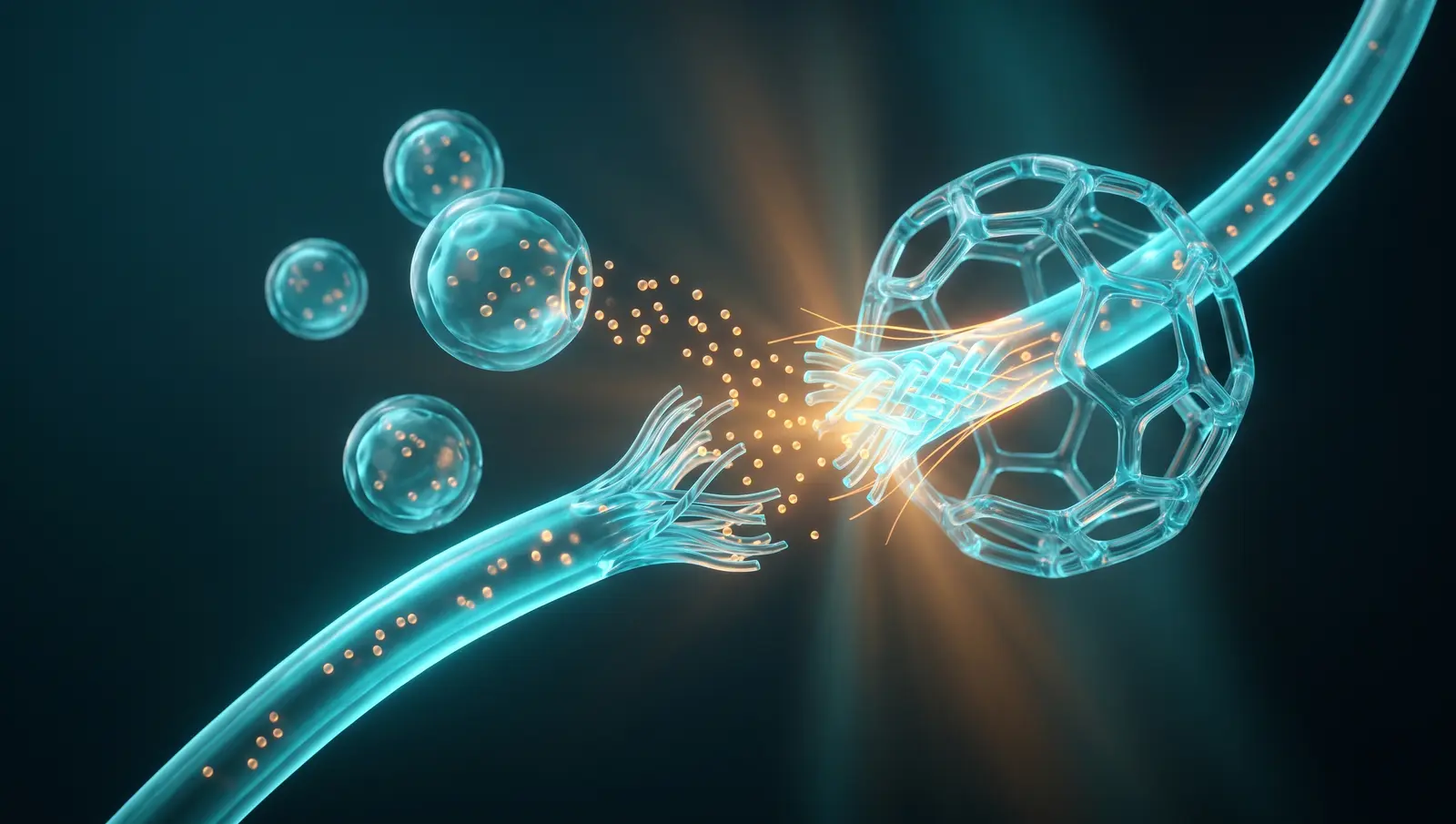
Conceptual artwork for the care discussion. Individual findings and treatment options require clinical evaluation.
What these therapies address
PRP (platelet-rich plasma) concentrates platelets, growth factors, and healing signals from the patient's own blood and delivers them under ultrasound guidance to the target site. The rationale is to provide localized biological support for tissue healing at sites that standard care cannot fully address: chronic tendon and joint damage, fascial adhesion, and neurogenic inflammation with a structural component.
Neural prolotherapy — also called perineural injection therapy — is a distinct technique that targets peripheral nerve sensitization at the tissue level. Small-volume injections are delivered at points of neurogenic inflammation along peripheral nerve pathways. The technique is different from classical proliferant prolotherapy and requires specific training. We use it for patients with complex regional pain presentations where peripheral nerve sensitization is a documented contributor.
Ultrasound guidance is required for anatomic accuracy. Image guidance ensures the injectate reaches the intended target rather than the surrounding tissue — a critical distinction for both safety and effectiveness.
Both techniques are integrated into the rehabilitation plan — they address structural and inflammatory contributors that limit rehabilitation progress, but they do not replace the rehabilitation work in Domains 1, 2, and 4.
Domains most involved:
Every plan starts from the same map: the 7 Domains of Recovery.
How it fits your plan
An injection is considered only after the examination identifies a relevant problem and simpler options have been discussed. The decision also depends on the evidence, your preferences and your response to prior care.
Interest in a regenerative therapy is a reason to ask questions, not evidence that it fits your condition. We connect any proposed option to the evaluation, review established alternatives and distinguish research mechanisms from demonstrated clinical benefit.
We review your history, explain the findings, agree on next steps and check how you respond.
Potential Therapies
We use established medicine where it works, and emerging medicine where it makes sense.
These are options to discuss after evaluation, not a predetermined treatment plan. Each label refers to the condition or indication described beside that therapy; evidence can differ for another use. An evidence label does not mean FDA approval.
- Ultrasound-guided PRP (platelet-rich plasma) injectionEvidence: Emerging
Image-guided delivery to target site; growth factors and healing signals from autologous blood
- Neural prolotherapy / perineural injection therapyEvidence: Emerging
Peripheral nerve sensitization and neurogenic inflammation; distinct technique from standard prolotherapy
Perineural Injection Therapy
Perineural injection therapy places a selected solution around a peripheral nerve. Dilute dextrose has been studied for carpal tunnel syndrome and selected other nerve-related pain presentations. It differs from injecting a more concentrated dextrose solution into a ligament or tendon attachment.
The evaluation asks whether a nerve is contributing to your symptoms and whether its location, examination findings and relevant testing support a specific target. Evidence for one nerve or technique does not establish benefit for every persistent pain condition.
If an injection is appropriate, we discuss the solution, imaging guidance, alternatives and risks, including temporary discomfort, bleeding, infection or nerve injury. We assess changes in symptoms and function alongside rehabilitation before deciding on further treatment.
The strongest data here concern ultrasound-guided dextrose around the median nerve in carpal tunnel syndrome. A small shoulder trial does not establish benefit for Achilles or elbow tendinopathy. Evidence for other superficial perineural techniques and post-surgical pain remains limited.
- Carpal tunnel randomized trial (2017)
- Carpal tunnel volume trial (2020)
- Shoulder perineural trial (2026)
Prolotherapy for Ligamentous Support
Prolotherapy typically uses a dextrose solution around a selected joint, ligament or tendon attachment with the aim of stimulating a local repair response. A feeling of looseness does not by itself establish ligament damage or identify a treatment target.
Research varies by condition and injection technique. Evidence for spinal instability and hypermobility is limited. Improvement in pain does not prove that a ligament has healed. For intra-articular knee osteoarthritis injections, a VA review found little to no advantage over saline on key outcomes.
A plan starts with the examination, activity goals and appropriate rehabilitation. Before considering an injection, we review the evidence, possible pain flare, bleeding, infection and injury to nearby structures, as well as alternatives. Follow-up evaluates function and stability rather than committing you to a preset series.
Pain relief does not prove ligament repair or restored stability. The VA review found little to no benefit for intra-articular knee dextrose versus saline on key outcomes; evidence for low-back applications was very uncertain. Evidence in hEDS includes a small shoulder case series, not proof of whole-body benefit.
Compare the precision injection menuWhere the evidence stands
PRP and neural prolotherapy carry emerging evidence for the musculoskeletal and neurogenic pain applications used here — promising clinical evidence, active investigation, but not yet a standard of care for every indication treated.
Sources and what they support
- FDA information about regenerative medicine therapies
Regulatory and safety information about unapproved regenerative products. This is a disclosure source, not evidence that a product benefits a particular condition.
How we grade evidence
Pricing
| Service | Price |
|---|---|
| Ultrasound-guided regenerative injection (PRP) | Confirmed in writing at your Strategy Consultation |
| Neural prolotherapy / perineural injection session | Confirmed in writing at your Strategy Consultation |
Neuregen is an out-of-network specialty clinic. Most therapies listed here are not covered by insurance; we provide itemized documentation you can submit to your insurer, and we tell you before any therapy which parts, if any, are typically reimbursed.
Financing options are reviewed at your Strategy Consultation before any plan is finalized.
The training behind this care
Neuregen considers regenerative options within a rehabilitation plan, with condition-specific evidence labels and upfront discussion of experimental status. The purpose is to decide whether an option belongs in your care at all.
Dr. David George: Board certifications and training in functional neurology, integrative psychiatry, and mental health; certified brain injury specialist.
Training most relevant to this area
- NASM Certified Corrective Exercise Specialist
- Ultrasound-guided neural hydrodissection and neural prolotherapy (perineural injection therapy)
- Ultrasound-guided joint injections and nerve blocks
- Regenerative/cellular medicine (PRP, stem cell, exosome therapies)
These are the founder’s qualifications. We confirm the treating clinician and their role when discussing your plan.
See Dr. George’s full credentialsFrequently asked questions
What is PRP and how is it prepared?
PRP is platelet-rich plasma — a concentration of platelets, growth factors, and healing signals isolated from the patient's own blood by centrifugation. The preparation process concentrates platelets above the baseline blood concentration, producing a product that is then delivered under ultrasound guidance to the target tissue site.
What is neural prolotherapy?
Neural prolotherapy, also called perineural injection therapy, is a technique developed to target peripheral nerve sensitization and neurogenic inflammation at the tissue level. Small-volume injections are placed at points of neurogenic inflammation along peripheral nerve pathways — typically subcutaneously near the nerves in question. It is distinct from classical prolotherapy, which uses proliferant solutions aimed at tendon and ligament remodeling. Neural prolotherapy requires specific training and is used for patients where peripheral nerve sensitization is a documented contributor to their pain presentation.
Why is ultrasound guidance required?
Ultrasound guidance provides real-time visualization of the target anatomy, ensuring the injectate is delivered to the intended structure rather than surrounding tissue. For PRP and image-guided injections, anatomic accuracy matters for both effectiveness and safety. Neuregen does not perform regenerative injections without image guidance.
What evidence supports these therapies?
Both PRP and neural prolotherapy carry emerging evidence — promising clinical evidence and active investigation, but not yet a standard of care for every indication treated here. Neuregen labels this explicitly. These therapies are offered with full transparency about where the evidence stands, under physician supervision, and integrated into a broader rehabilitation plan rather than as standalone procedures.
Are regenerative injections the same as stem cell therapy?
No. PRP is derived from the patient's own blood and does not involve whole-cell transplants. Neural prolotherapy uses small-volume injection solutions targeting peripheral nerve pathways. Neuregen does not perform whole-cell stem cell transplants.
Who determines whether I am a candidate?
We determine candidacy after a full medical review that includes the assessment findings, imaging where relevant, and the clinical picture as a whole. Structural and neurogenic pain presentations are evaluated in the context of the broader 7-Domain framework — not in isolation.
Start with a Strategy Consultation
Persistent pain or reduced function may already be changing how you spend your days. A consultation can help you compare options and unanswered questions; there is no deadline to choose an experimental treatment.
8090 N. 85th Way, Suite 100, Scottsdale, AZ 85258 · Mon–Thu, 9:00 AM – 5:30 PM