
Start with what life feels like now
Does the evidence support EBOO for fatigue and brain fog?
We help people with fatigue, dizziness or brain fog by examining the systems involved together so that they can work toward the activities they miss.
How we look at the whole picture
You used to run for miles. Now a short walk, a workday or a trip to the store can leave you exhausted.
You have seen different specialists, but you still need someone to explain how the pieces fit together.
You do not need to know which treatment to ask for. Start with what has changed and what you want to be able to do again.
The 7 Domains of Recovery™
Your symptoms may belong in the same conversation.
A racing heart, poor sleep, neck pain and trouble concentrating can affect the same day. The seven-domain approach asks how those problems interact, rather than assuming each belongs in a separate appointment.
Neuregen's proprietary 7 Domains of Recovery framework organizes that conversation around seven connected parts of your life and health. We consider all seven, then focus the evaluation on the questions your history raises.
Explore our clinical framework- 1Brain function & neural networks
What has changed in your memory, concentration, balance or sensory tolerance?
- 2Autonomic & nervous system regulation
What happens when you stand, move, rest or encounter stress?
- 3Immune function & neuroinflammation
What immune history, reactions or symptoms need a closer look?
- 4Brain energy & metabolic health
What affects your energy through the day and after activity?
- 5Structure, stability & body-to-brain signals
How do pain, posture, movement and stability affect what you can do?
- 6Psychological flexibility & behavioral recovery
How are mood, stress and patterns of coping affecting your day?
- 7Life, relationships & environment
What demands, relationships and support shape your recovery?
A plan starts with the things you want to do again.
Bring the story of what changed: what you could do before, what you can do now, and what happens afterward. We review that alongside your prior evaluations and choose assessments that answer the remaining questions.
01
Tell us what you want your life to look like
We start with what has changed, what you have tried, and the activities you most want to return to.
02
Answer the questions the history leaves open
We review prior reports and select relevant assessments. You should understand what each assessment is meant to clarify.
03
Agree on the priorities and the first steps
We discuss the findings, possible approaches, costs and practical constraints. The plan sets an order that fits your situation.
04
Check what changes and adjust together
We compare your response with the starting point, including daily function. If something is not helping, we discuss what needs to change.
Only then do we discuss which therapies, if any, belong in your plan. The choice depends on the findings, the evidence, your preferences and how you respond.
Talk through your situationBlood Rehabilitation · EBOO / EBO2
EBOO for Brain Energy & Metabolic Health
Your brain runs on oxygen and clean fuel. EBOO filters, oxygenates, and re-energizes your blood before it goes back to work for your brain.
Clinically: An extracorporeal blood oxygenation and ozonation protocol positioned as metabolic and brain-energy support — offered as an investigational adjunct within a broader rehabilitation plan, not as a standalone longevity procedure.
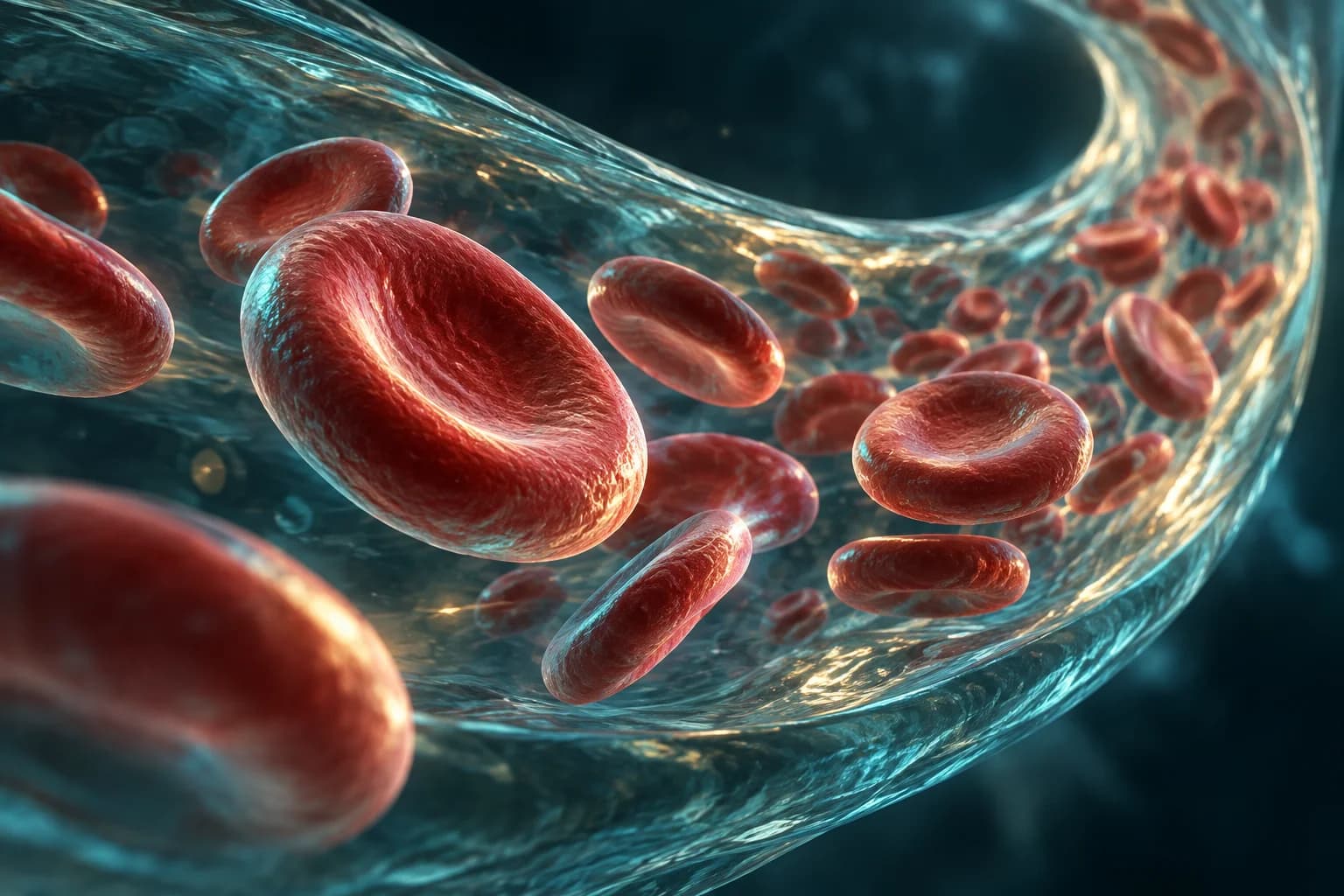
Conceptual artwork for the care discussion. Individual findings and treatment options require clinical evaluation.
The brain's energy deficit as a rehabilitation target
Neuroinflammation, post-viral syndromes, and chronic immune dysregulation often produce a measurable deficit in brain energy metabolism — impaired oxygen utilization, mitochondrial dysfunction, and disrupted redox signaling. When the brain cannot generate energy efficiently, neurorehabilitation becomes harder and recovery stalls.
EBOO is proposed to address this metabolic layer directly: blood is drawn, filtered, oxygenated, and treated with medical-grade ozone outside the body before being returned. Proposed mechanisms include support for oxygen utilization, redox signaling, and cellular energy, as well as immunomodulatory effects. Evidence for these mechanisms is evolving.
Post-viral fatigue and brain-energy depletion — common presentations in Long COVID and post-infectious recovery — map clearly to Domain 4. EBOO is considered for selected patients in this context as part of a plan that also addresses Domain 3 (Immune Regulation) and Domain 2 (Autonomic) rather than as the only intervention.
Domains most involved:
Every plan starts from the same map: the 7 Domains of Recovery.
How it fits your plan
EBOO for brain energy sits in the Treat phase — after metabolic baseline (fatigue diary, sleep assessment, metabolic screen) and immune workup have established that energy-metabolism deficit is a meaningful target. It is sequenced within the broader rehabilitation plan, not offered as the starting point.
Blood therapies only make sense in relation to a specific clinical question. We review the indication, evidence and risks for TPE or EBOO separately, then consider whether either has a role alongside rehabilitation and your existing medical care.
We review your history, explain the findings, agree on next steps and check how you respond.
Potential Therapies
We use established medicine where it works, and emerging medicine where it makes sense.
These are options to discuss after evaluation, not a predetermined treatment plan. Each label refers to the condition or indication described beside that therapy; evidence can differ for another use. An evidence label does not mean FDA approval.
- EBOO / EBO2 (Extracorporeal Blood Oxygenation and Ozonation)Evidence: Investigational
Investigational adjunct for metabolic and brain-energy support. Offered within a broader rehabilitation plan with explicit informed consent and no outcome guarantee.
Where the evidence stands
EBOO for metabolic and brain-energy support is classified investigational at Neuregen. Proposed mechanisms include support for oxygen utilization, redox signaling, and cellular energy — but direct, controlled evidence for neuroinflammatory or post-viral applications remains limited and evolving. Neuregen offers this approach with explicit informed consent and no outcome guarantee, as part of a broader rehabilitation plan.
Sources and what they support
- ASFA 2023 guidelines for therapeutic apheresis
Apheresis recommendations are indication-specific. An established use for one disease does not establish TPE for Alzheimer’s, Long COVID, MCAS or environmental illness.
How we grade evidence
Pricing
| Service | Price |
|---|---|
| EBOO / EBO2, single session | Confirmed in writing at your Strategy Consultation |
| EBOO series | Confirmed in writing at your Strategy Consultation |
Neuregen is an out-of-network specialty clinic. Most therapies listed here are not covered by insurance; we provide itemized documentation you can submit to your insurer, and we tell you before any therapy which parts, if any, are typically reimbursed.
Financing options are reviewed at your Strategy Consultation before any plan is finalized.
The training behind this care
Neuregen brings the blood-therapy discussion into the same plan as neurologic, autonomic and functional care. We ask what a proposed intervention would change in daily life and how that change would be assessed.
Dr. David George: Board certifications and training in functional neurology, integrative psychiatry, and mental health; certified brain injury specialist.
Training most relevant to this area
- Member, American Society for Apheresis (ASFA)
- GCP Certified (NIDA)
These are the founder’s qualifications. We confirm the treating clinician and their role when discussing your plan.
See Dr. George’s full credentialsFrequently asked questions
Is EBOO an established treatment for brain energy or post-viral fatigue?
No. EBOO is classified investigational at Neuregen for these indications — early-stage evidence, offered with explicit informed consent and no outcome guarantee. Proposed mechanisms are being studied; the evidence base is evolving. Neuregen says so clearly at every consultation.
How does EBOO differ from standard hyperbaric oxygen therapy?
EBOO processes blood extracorporeally — drawn from the patient, filtered, oxygenated, and treated with medical-grade ozone outside the body, then returned. Hyperbaric oxygen therapy delivers dissolved oxygen through increased atmospheric pressure in a chamber. The mechanisms and evidence bases differ; they are not interchangeable.
Is EBOO offered for general wellness or longevity at Neuregen?
No. EBOO at Neuregen is offered only within a clinical rehabilitation framework, not as a general wellness or longevity procedure. The indication must be established by our clinical team after a full medical review before EBOO is included in a plan.
Can EBOO be combined with TPE?
The sequencing of any two therapies — including TPE and EBOO — is determined by our clinical team after a full medical review. Neuregen does not prescribe standard bundles; the plan is individualized.
Is EBOO relevant for post-viral fatigue specifically?
Post-viral fatigue and brain-energy depletion in Long COVID and post-infectious recovery are among the presentations where EBOO may be considered at Neuregen. The proposed metabolic mechanisms overlap with what these patients experience. Whether it belongs in a given plan is determined after a full medical review.
Start with a Strategy Consultation
Ongoing fatigue or difficulty thinking may already be limiting your work and family life. An evaluation can help organize what is known, what remains uncertain and whether further investigation is useful before considering blood therapy.
8090 N. 85th Way, Suite 100, Scottsdale, AZ 85258 · Mon–Thu, 9:00 AM – 5:30 PM