
Start with what life feels like now
What can electrical and magnetic therapies add to a plan?
We help people with pain that limits sitting, walking or sleeping by examining movement and nervous-system factors so that they can work toward the activities pain has interrupted.
How we look at the whole picture
You plan your day around how long you can sit, stand or walk before pain takes over.
You have tried to keep going, but a sore neck, back or joint keeps bringing you back to the same limits.
You do not need to know which treatment to ask for. Start with what has changed and what you want to be able to do again.
The 7 Domains of Recovery™
Your symptoms may belong in the same conversation.
Pain can involve tissue, movement, nerve sensitivity, sleep and stress. The seven-domain approach considers how these factors may be sustaining the problem.
Neuregen's proprietary 7 Domains of Recovery framework organizes that conversation around seven connected parts of your life and health. We consider all seven, then focus the evaluation on the questions your history raises.
Explore our clinical framework- 1Brain function & neural networks
What has changed in your memory, concentration, balance or sensory tolerance?
- 2Autonomic & nervous system regulation
What happens when you stand, move, rest or encounter stress?
- 3Immune function & neuroinflammation
What immune history, reactions or symptoms need a closer look?
- 4Brain energy & metabolic health
What affects your energy through the day and after activity?
- 5Structure, stability & body-to-brain signals
How do pain, posture, movement and stability affect what you can do?
- 6Psychological flexibility & behavioral recovery
How are mood, stress and patterns of coping affecting your day?
- 7Life, relationships & environment
What demands, relationships and support shape your recovery?
A plan starts with the things you want to do again.
We review the pattern of pain, the examination and any relevant prior imaging. We agree on a functional goal, such as sitting through a meal or walking farther, before choosing care.
01
Tell us what you want your life to look like
We start with what has changed, what you have tried, and the activities you most want to return to.
02
Answer the questions the history leaves open
We review prior reports and select relevant assessments. You should understand what each assessment is meant to clarify.
03
Agree on the priorities and the first steps
We discuss the findings, possible approaches, costs and practical constraints. The plan sets an order that fits your situation.
04
Check what changes and adjust together
We compare your response with the starting point, including daily function. If something is not helping, we discuss what needs to change.
Only then do we discuss which therapies, if any, belong in your plan. The choice depends on the findings, the evidence, your preferences and how you respond.
Talk through your situationRegenerative Therapies · PEMF & Electric Modalities
PEMF & Electric Modalities
Pulsed electromagnetic fields and electrical stimulation used to reduce pain and support tissue and nerve-muscle recovery inside your plan.
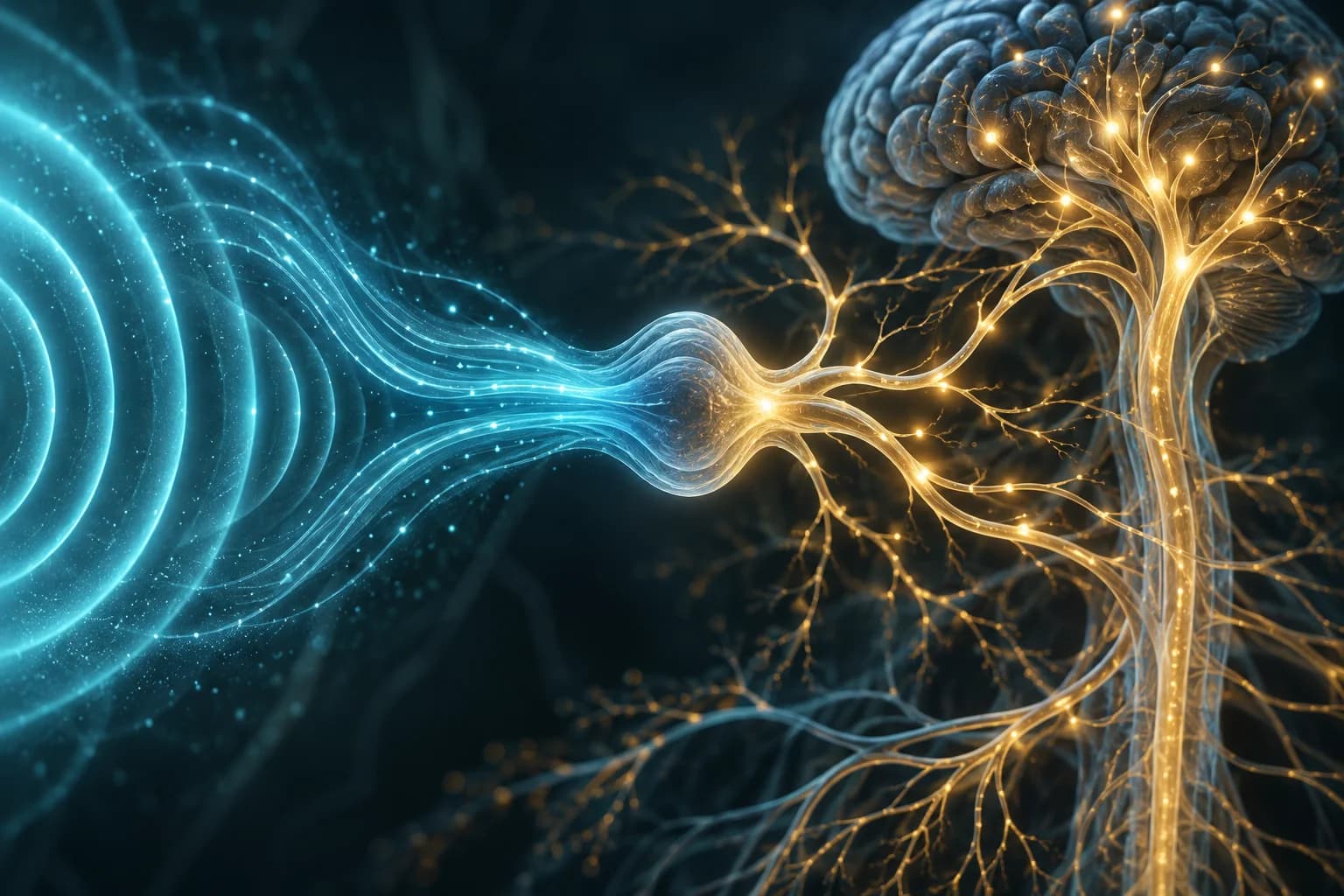
Conceptual artwork for the care discussion. Individual findings and treatment options require clinical evaluation.
How these modalities work
A pulsed electromagnetic field (PEMF) device generates a time-varying magnetic field that induces small electrical currents in the tissue beneath it. Proposed effects include changes in ion-channel activity and calcium signaling, shifts in inflammatory mediators, and improved microcirculation. The clinical footing is strongest for bone: PEMF devices are FDA-cleared for non-union fractures and certain post-operative fusion settings. Studies in musculoskeletal pain are mixed, and neurologic applications are at an earlier stage.
Electrical modalities are older and more familiar. Transcutaneous electrical nerve stimulation (TENS) applies current through skin electrodes to modulate pain signaling at the spinal cord. Neuromuscular electrical stimulation (NMES) drives muscle contraction directly and is used to re-activate muscle after deconditioning or neurologic injury. Both have a long history in physical medicine; the evidence for lasting benefit in chronic pain is mixed, and the effect is usually strongest during and shortly after use.
Neuregen uses these tools for what they do reliably: lower pain and muscle guarding enough for rehabilitation to proceed, and support tissue recovery around regenerative injections. We set the parameters and screen for contraindications, including implanted electronic devices, pregnancy, and some seizure histories. If a modality is not moving a domain, it is stopped.
Domains most involved:
Every plan starts from the same map: the 7 Domains of Recovery.
How it fits your plan
Electrical or electromagnetic options may be considered alongside rehabilitation. We discuss the reason for using them and review whether they are contributing to the goals you agreed on.
Interest in a regenerative therapy is a reason to ask questions, not evidence that it fits your condition. We connect any proposed option to the evaluation, review established alternatives and distinguish research mechanisms from demonstrated clinical benefit.
We review your history, explain the findings, agree on next steps and check how you respond.
Potential Therapies
We use established medicine where it works, and emerging medicine where it makes sense.
These are options to discuss after evaluation, not a predetermined treatment plan. Each label refers to the condition or indication described beside that therapy; evidence can differ for another use. An evidence label does not mean FDA approval.
- Pulsed electromagnetic field (PEMF) therapyEvidence: Emerging
FDA-cleared for bone healing; musculoskeletal pain and neurologic uses are emerging
- TENS (transcutaneous electrical nerve stimulation)Evidence: Emerging
Pain modulation through surface electrodes; long-used in physical medicine, lasting benefit in chronic pain is mixed
- NMES (neuromuscular electrical stimulation)Evidence: Emerging
Muscle re-activation after deconditioning or neurologic injury; used to enable rehabilitation work
Where the evidence stands
PEMF has established, FDA-cleared uses in bone healing. For pain and neurologic recovery, PEMF and electrical stimulation carry emerging evidence with mixed trial results. Neuregen uses them as adjuncts and does not claim outcomes beyond symptom relief that enables rehabilitation.
Sources and what they support
- FDA information about regenerative medicine therapies
Regulatory and safety information about unapproved regenerative products. This is a disclosure source, not evidence that a product benefits a particular condition.
How we grade evidence
Pricing
| Service | Price |
|---|---|
| Strategy ConsultationA real clinical conversation, not a sales call | Confirmed in writing at your Strategy Consultation |
Neuregen is an out-of-network specialty clinic. Most therapies listed here are not covered by insurance; we provide itemized documentation you can submit to your insurer, and we tell you before any therapy which parts, if any, are typically reimbursed.
Financing options are reviewed at your Strategy Consultation before any plan is finalized.
The training behind this care
Neuregen considers regenerative options within a rehabilitation plan, with condition-specific evidence labels and upfront discussion of experimental status. The purpose is to decide whether an option belongs in your care at all.
Dr. David George: Board certifications and training in functional neurology, integrative psychiatry, and mental health; certified brain injury specialist.
Training most relevant to this area
- NASM Certified Corrective Exercise Specialist
- Ultrasound-guided neural hydrodissection and neural prolotherapy (perineural injection therapy)
- Ultrasound-guided joint injections and nerve blocks
- Regenerative/cellular medicine (PRP, stem cell, exosome therapies)
These are the founder’s qualifications. We confirm the treating clinician and their role when discussing your plan.
See Dr. George’s full credentialsRelated pages
modality
Frequently asked questions
Is PEMF the same as a magnetic bracelet or mattress pad?
No. Static magnets in bracelets and pads do not produce a time-varying field and have no demonstrated therapeutic effect. PEMF devices pulse the field at set frequencies and intensities, which is what induces current in tissue. Consumer PEMF mats also exist; their parameters vary and they are not what is used here.
What does a session feel like?
PEMF is usually not felt at all, or as a mild pulsing sensation. TENS produces a tingling under the electrodes. NMES produces visible muscle contraction, which can feel unusual at first but should not be painful. Intensity is adjusted to your tolerance.
Who should not receive these modalities?
People with pacemakers, implanted defibrillators, or other implanted electronic devices, anyone who is pregnant, and some people with seizure disorders are screened out or treated only with specific precautions. We review your history before any modality is added.
Do these replace injections or rehabilitation?
No. They are used to lower pain and muscle guarding so that rehabilitation and, where indicated, regenerative injections can do their work. If a modality is not contributing to progress, it is removed from the plan.
Start with a Strategy Consultation
Persistent pain or reduced function may already be changing how you spend your days. A consultation can help you compare options and unanswered questions; there is no deadline to choose an experimental treatment.
8090 N. 85th Way, Suite 100, Scottsdale, AZ 85258 · Mon–Thu, 9:00 AM – 5:30 PM