
Start with what life feels like now
What belongs in a plan for persistent low back pain?
We help people with pain that limits sitting, walking or sleeping by examining movement and nervous-system factors so that they can work toward the activities pain has interrupted.
How we look at the whole picture
You plan your day around how long you can sit, stand or walk before pain takes over.
You have tried to keep going, but a sore neck, back or joint keeps bringing you back to the same limits.
You do not need to know which treatment to ask for. Start with what has changed and what you want to be able to do again.
The 7 Domains of Recovery™
Your symptoms may belong in the same conversation.
Pain can involve tissue, movement, nerve sensitivity, sleep and stress. The seven-domain approach considers how these factors may be sustaining the problem.
Neuregen's proprietary 7 Domains of Recovery framework organizes that conversation around seven connected parts of your life and health. We consider all seven, then focus the evaluation on the questions your history raises.
Explore our clinical framework- 1Brain function & neural networks
What has changed in your memory, concentration, balance or sensory tolerance?
- 2Autonomic & nervous system regulation
What happens when you stand, move, rest or encounter stress?
- 3Immune function & neuroinflammation
What immune history, reactions or symptoms need a closer look?
- 4Brain energy & metabolic health
What affects your energy through the day and after activity?
- 5Structure, stability & body-to-brain signals
How do pain, posture, movement and stability affect what you can do?
- 6Psychological flexibility & behavioral recovery
How are mood, stress and patterns of coping affecting your day?
- 7Life, relationships & environment
What demands, relationships and support shape your recovery?
A plan starts with the things you want to do again.
We review the pattern of pain, the examination and any relevant prior imaging. We agree on a functional goal, such as sitting through a meal or walking farther, before choosing care.
01
Tell us what you want your life to look like
We start with what has changed, what you have tried, and the activities you most want to return to.
02
Answer the questions the history leaves open
We review prior reports and select relevant assessments. You should understand what each assessment is meant to clarify.
03
Agree on the priorities and the first steps
We discuss the findings, possible approaches, costs and practical constraints. The plan sets an order that fits your situation.
04
Check what changes and adjust together
We compare your response with the starting point, including daily function. If something is not helping, we discuss what needs to change.
Only then do we discuss which therapies, if any, belong in your plan. The choice depends on the findings, the evidence, your preferences and how you respond.
Talk through your situationRegenerative Therapies · Named Program
The Regenerative Low Back Makeover
A structured program for chronic low-back and post-surgical nerve pain: image-guided regenerative injections paired with a graded stability and rehabilitation arc.
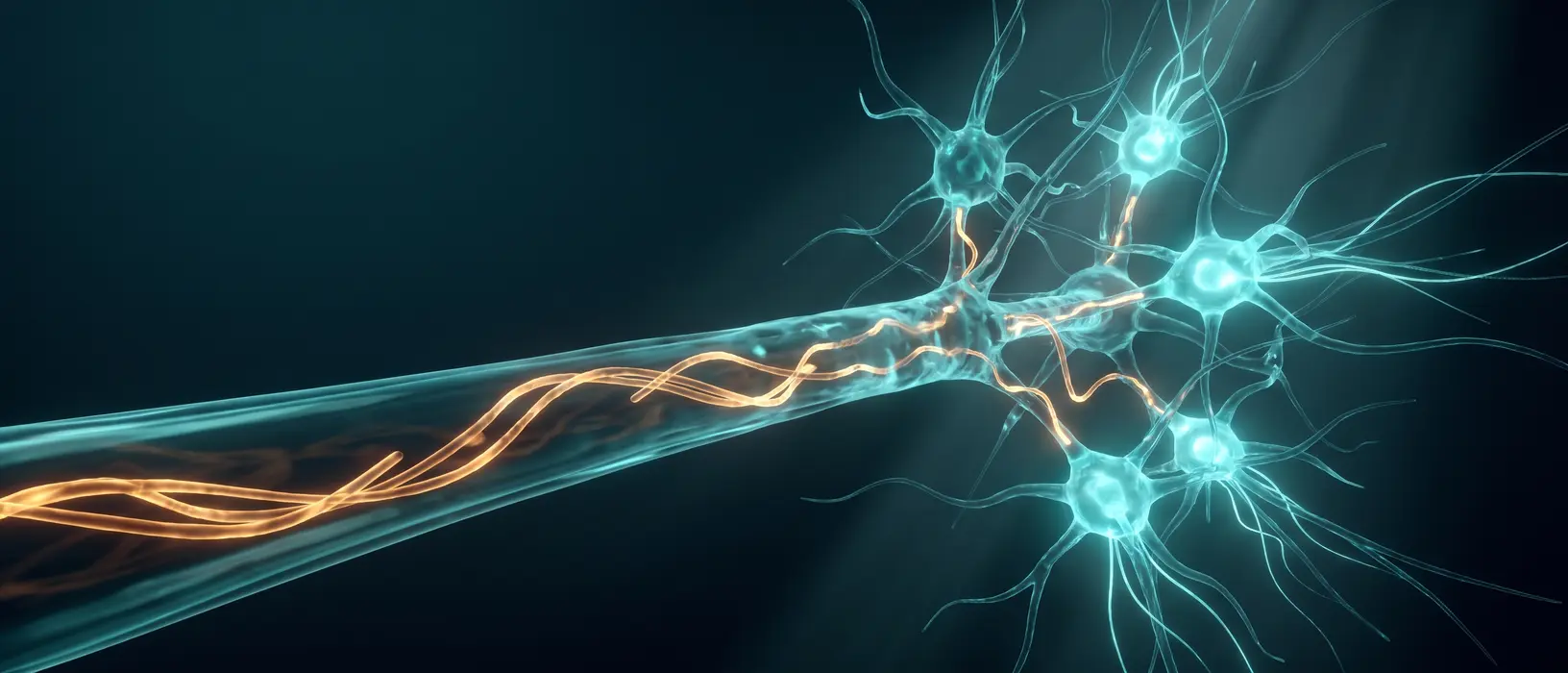
Conceptual artwork for the care discussion. Individual findings and treatment options require clinical evaluation.
Why a program instead of a procedure
Chronic low-back pain rarely has one source. Ligament laxity at the sacroiliac and iliolumbar region, facet and disc contributors, myofascial pain, and sensitized peripheral nerves such as the cluneal nerves often coexist, and after surgery, scar-related nerve involvement is added to the list. An injection can address a tissue target. It cannot restore load tolerance, motor control, or the confidence to move, which is why the program pairs every injection phase with graded rehabilitation.
The program begins with an examination and a review of existing imaging to map which structures are contributing. Ultrasound-guided PRP or dextrose prolotherapy is directed at ligament, tendon, and joint targets. Where a peripheral nerve is entrapped or sensitized, neural hydrodissection or perineural injection is used. Between visits, a stability and movement program progresses under supervision, coordinated with physical therapy and, when Domain 5 findings warrant it, a structural workup of the cervical spine and posture.
For persistent pain after spinal surgery, the program coordinates with your surgeon and does not replace surgical care where it is indicated. Progressive neurologic deficit, bowel or bladder change, or other red flags are referred for surgical evaluation first. The escalation principle applies in the other direction as well: the least invasive component that moves the pain is used before the next one is added.
Domains most involved:
Every plan starts from the same map: the 7 Domains of Recovery.
How it fits your plan
The low-back program begins with your history, examination and any relevant imaging review. We then discuss which options belong in the plan and how rehabilitation and follow-up would fit around them.
Interest in a regenerative therapy is a reason to ask questions, not evidence that it fits your condition. We connect any proposed option to the evaluation, review established alternatives and distinguish research mechanisms from demonstrated clinical benefit.
We review your history, explain the findings, agree on next steps and check how you respond.
Potential Therapies
We use established medicine where it works, and emerging medicine where it makes sense.
These are options to discuss after evaluation, not a predetermined treatment plan. Each label refers to the condition or indication described beside that therapy; evidence can differ for another use. An evidence label does not mean FDA approval.
- Ultrasound-guided PRP to spinal ligament and joint targetsEvidence: Emerging
Sacroiliac, iliolumbar, and facet-region targets identified on examination
- Dextrose prolotherapy for ligament laxityEvidence: Emerging
Proliferant injection aimed at ligament and enthesis remodeling
- Neural hydrodissection / perineural injectionEvidence: Emerging
For entrapped or sensitized peripheral nerves, including post-surgical scar involvement
- Graded stability and movement programEvidence: Established
Exercise therapy is a guideline-recommended treatment for chronic low-back pain; delivered between and after injection visits
Where the evidence stands
Exercise-based rehabilitation for chronic low-back pain is established in clinical practice guidelines. Regenerative injections to the spine and pelvis (PRP, prolotherapy, hydrodissection) carry emerging evidence: encouraging trials and case series, but not a standard of care. The program is labeled emerging as a whole.
Sources and what they support
- FDA information about regenerative medicine therapies
Regulatory and safety information about unapproved regenerative products. This is a disclosure source, not evidence that a product benefits a particular condition.
How we grade evidence
Pricing
| Service | Price |
|---|---|
| Ultrasound-guided regenerative injection (PRP) | Confirmed in writing at your Strategy Consultation |
| Neural prolotherapy / perineural injection session | Confirmed in writing at your Strategy Consultation |
Neuregen is an out-of-network specialty clinic. Most therapies listed here are not covered by insurance; we provide itemized documentation you can submit to your insurer, and we tell you before any therapy which parts, if any, are typically reimbursed.
Financing options are reviewed at your Strategy Consultation before any plan is finalized.
The training behind this care
Neuregen considers regenerative options within a rehabilitation plan, with condition-specific evidence labels and upfront discussion of experimental status. The purpose is to decide whether an option belongs in your care at all.
Dr. David George: Board certifications and training in functional neurology, integrative psychiatry, and mental health; certified brain injury specialist.
Training most relevant to this area
- NASM Certified Corrective Exercise Specialist
- Ultrasound-guided neural hydrodissection and neural prolotherapy (perineural injection therapy)
- Ultrasound-guided joint injections and nerve blocks
- Regenerative/cellular medicine (PRP, stem cell, exosome therapies)
These are the founder’s qualifications. We confirm the treating clinician and their role when discussing your plan.
See Dr. George’s full credentialsRelated pages
modality
Frequently asked questions
Is this a substitute for back surgery?
No. Where surgery is indicated, it comes first, and red-flag findings are referred for surgical evaluation before anything else. The program is for chronic pain without a surgical indication, and for pain that persists after surgery, in coordination with your surgeon.
How is this different from an epidural steroid injection?
An epidural steroid injection places a corticosteroid near an inflamed nerve root to reduce inflammation for a period of time. The injections in this program deliver PRP or a proliferant solution to ligament, tendon, joint, or perineural targets with the aim of supporting tissue repair, and they are paired with a rehabilitation program. Neither approach is right for every patient; the examination decides.
What happens between injection visits?
The stability and movement program continues. It is progressed under supervision as pain and load tolerance change, and it carries on after the last injection so the gains hold. Sessions are coordinated with physical therapy where you already have a therapist.
How many injections will I need?
That is set by the examination and by your response, not by a fixed package. We review progress after each phase and add the next component only if the previous one has not resolved the target.
Start with a Strategy Consultation
Persistent pain or reduced function may already be changing how you spend your days. A consultation can help you compare options and unanswered questions; there is no deadline to choose an experimental treatment.
8090 N. 85th Way, Suite 100, Scottsdale, AZ 85258 · Mon–Thu, 9:00 AM – 5:30 PM